The 7 Piece Sectional a Friendly Guide to Big Comfort


Movie night starts the same way in a lot of Milwaukee homes. One person grabs the corner of the old sofa, someone else claims the recliner, a kid ends up on the floor with a blanket, and everybody says the same thing. It's probably time for something bigger.
That's usually when a 7 Piece Sectional enters the conversation.
For many families, it sounds like the answer to everything. More room to stretch out. More seats for guests. A layout that makes the living room feel like the place everyone wants to be. But it also brings real questions. Will it fit through the front door? Will it overwhelm the room? Will the power features hold up? Will it still make sense a few years from now?
That's where a local family furniture store can help. Since 1928, BILTRITE has helped Metro Milwaukee households sort through big furniture decisions without pressure and without fluff. A 7 piece sectional can be a smart choice, but only if it fits the home, the family, and the way the room is used. For readers who want a little extra background before diving in, this guide to what to know before buying a sectional is a helpful starting point.
Table of Contents
- Welcome to the World of Big Comfy Sectionals
- Decoding the 7 Piece Sectional
- The Big Question Will It Fit
- Finding a Sectional That Is Built to Last
- Getting Your New Sectional Home Hassle Free
- Your New Favorite Spot Awaits at BILTRITE
Welcome to the World of Big Comfy Sectionals
A 7 piece sectional usually enters the picture after a family gets tired of making the old seating situation work. The room may look fine, but it doesn't function the way the household needs it to. Someone wants a chaise to stretch out on. Someone else wants room for everybody during Packers season, movie night, or holiday visits.
That's why this category gets so much attention. It promises comfort, flexibility, and enough seating to make the room feel welcoming instead of crowded. For busy households, that matters.
BILTRITE has been part of Metro Milwaukee since 1928, and that long view changes how furniture gets discussed. A sectional isn't treated like a quick trend piece. It's treated like the spot where kids build forts, grandkids pile in for cartoons, friends gather for coffee, and couples settle in at the end of a long day.
Why families are drawn to them
Some shoppers want a sectional because they have a larger room to fill. Others want one because they need smarter seating in a home with tricky walls, traffic paths, or changing needs over time. A modular layout can help with both.
A big sectional should make daily life easier, not create a new set of problems.
That's the heart of the decision. The goal isn't just buying more sofa. The goal is choosing a setup that fits real life in a Wisconsin home, whether that means an older house with tight corners, a condo with elevator limits, or a family room that needs to do a little of everything.
What makes this purchase different
A chair can be swapped out pretty easily. A lamp can move from room to room. A 7 piece sectional is different because it affects the whole space. It shapes traffic flow, determines how people gather, and often becomes the center of the room.
That's why this purchase deserves a little patience. When shoppers slow down and think about size, delivery, durability, and daily use, they usually end up happier with what they bring home.
Decoding the 7 Piece Sectional
A lot of shoppers hear “7 piece sectional” and picture one giant couch. That's not really what it is. A 7 Piece Sectional belongs to the modular sectional category, which means it's built from separate components instead of one fixed sofa. Industry explanations describe sectionals as made from multiple sections, with arrangements that can range from smaller sets up to 5-piece and beyond, and a 7-piece version often includes parts such as armless seats, corners, chaises, wedges, and consoles, as explained in this overview of modular sectional construction and piece counts.
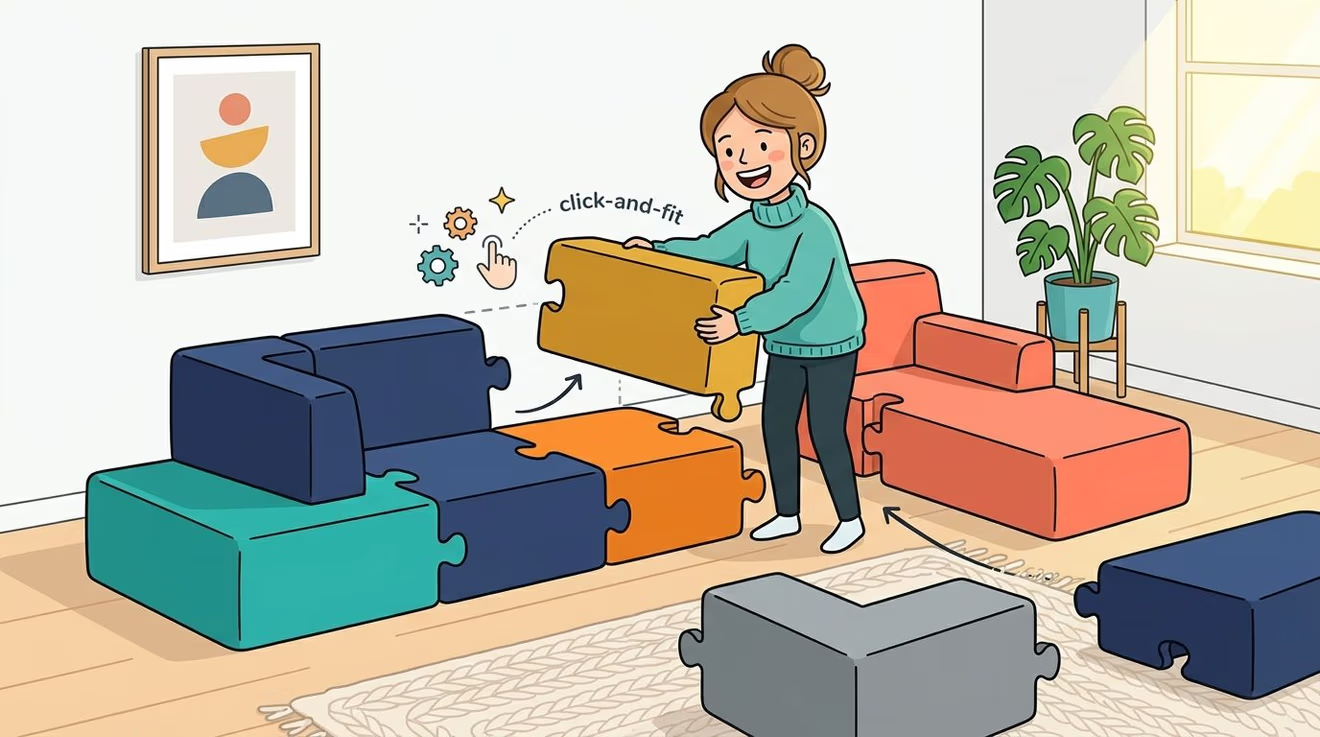
That modular setup is the reason these sectionals appeal to so many families. A standard sofa gives one fixed form. A sectional made from separate modules gives far more options for how the room works.
Readers comparing layouts may also want to see how a 5 piece sectional differs in scale and flexibility.
Why the piece count matters
The “7” doesn't mean seven people. It means seven separate furniture components that connect to create one seating group. That can confuse shoppers, because two sectionals with the same piece count can feel very different.
One 7 piece sectional might include:
- Armless chairs that extend the length without adding bulky arms
- A corner piece that creates the turn in an L-shape or U-shape
- A chaise for lounging
- A wedge that softens the angle
- A console that adds cupholders or storage
Another might skip one of those and use a different mix. That's why the piece count is only the beginning. The essential question is what those pieces do together.
Common modules in the mix
Some modules are there for seating. Others change how the sectional functions.
A chaise creates a lounge seat. A console adds convenience. A corner unit makes the sectional wrap around the room. Armless seats help extend capacity without making the layout feel too boxed in. In larger rooms, this modular approach can seat many more people than a standard sofa, which is one reason families like the format.
Let's look at it this way:
| Module | What it changes |
|---|---|
| Armless seat | Adds seating length with less visual bulk |
| Corner or wedge | Creates the turn in the sectional |
| Chaise | Gives one person a full lounge position |
| Console | Adds storage or cupholder function |
| End seat | Finishes the layout and defines the edges |
Practical rule: Don't shop by piece count alone. Shop by the job each piece has to do in the room.
That one shift helps shoppers avoid a common mistake. They fall in love with the idea of “seven pieces,” but they haven't checked whether those seven pieces create the right shape for their home.
The Big Question Will It Fit
This is the question that matters most. Many shoppers need help figuring out whether a 7 piece sectional will fit through the home and work in the room, especially in houses with tight corners or narrow hallways. That gap comes up often in online shopping, which is why practical measuring guidance matters so much, as noted in this discussion of sectional fit and delivery-path planning.
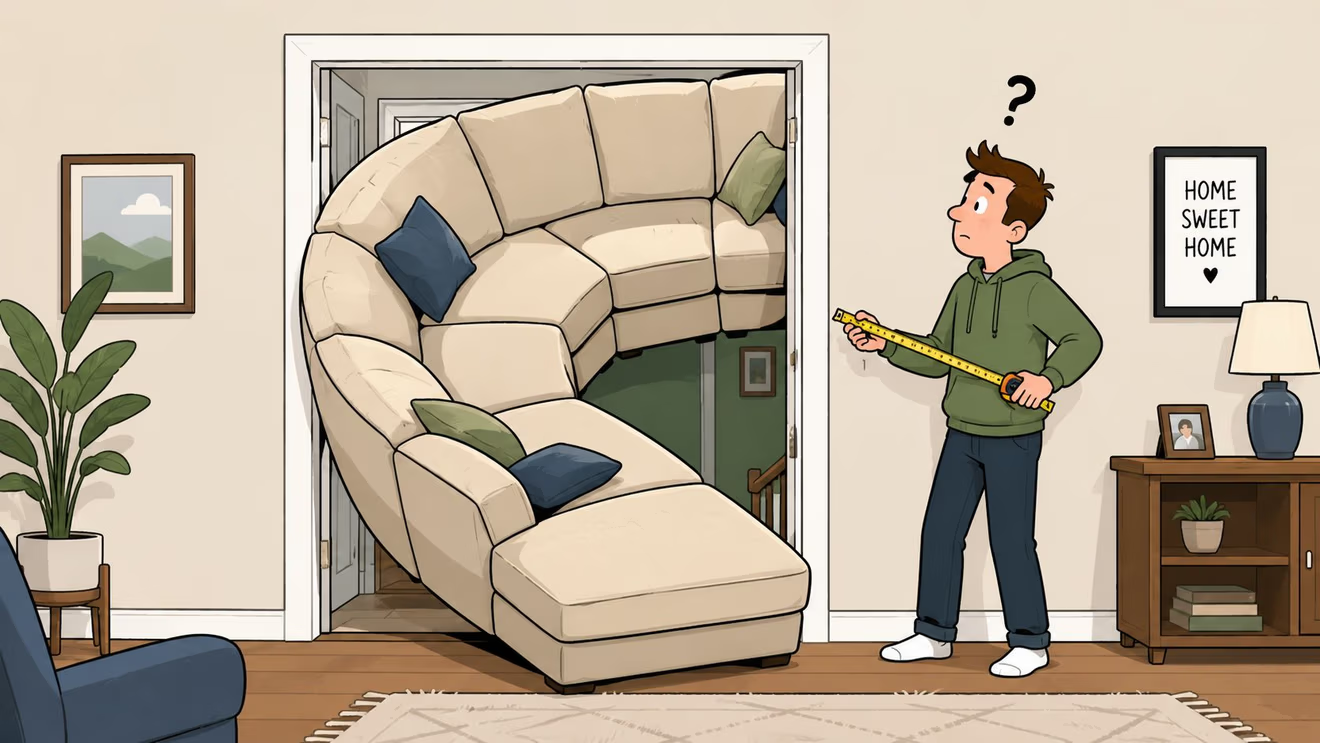
In Milwaukee-area homes, this gets even more important. Older houses can have charming layouts and stubborn stair turns. Condos can have elevator limits. Apartments can have entry paths that look manageable until a large furniture piece shows up.
A detailed guide to how to measure for a sectional sofa can help, but the basics are easier than many people think.
Measure the room first
Start with the assembled footprint, not just the wall where the sectional will sit. Some 7 piece sectionals are large enough to change how the whole room moves and feels.
Use painter's tape on the floor and outline the sectional shape. Then walk around it the way the household would. Walk from the doorway to the kitchen. Walk past the coffee table. Recline where the recliners would open, if the model has motion seats.
A quick room check should include:
- Wall length: Measure the walls the sectional will touch or run alongside.
- Depth into the room: Check how far the chaise or return side extends.
- Traffic paths: Make sure people can still move through the space naturally.
- Clearance for motion: Leave room for reclining seats and leg support to open.
That tape outline tells the truth fast. A sectional can look great in a showroom or on a screen and still feel oversized once it's mapped onto a real floor.
Then measure the path
The sectional also has to get inside. Since a 7 piece sectional comes apart into modules, that helps, but each piece still needs a clear path through the home.
Measure the full delivery route, not just the front door:
Entry door openings
Measure width and height. Don't forget door trim, storm doors, and handles that reduce clearance.Hallways
Long narrow hallways can create problems even if the door opening looks generous.Corners and turns
Check turning space where movers would pivot a section.Stairwells
Watch for low ceilings, railing interference, and tight landings.Elevators or condo entrances
Shared buildings often create the biggest surprises.
If the room is large but the path is tight, the sectional still may not be the right answer in that exact configuration.
That's where shoppers often get stuck. They focus on the room and forget the route.
A simple fit checklist
Before saying yes to any large sectional, it helps to answer these questions:
- Can each section get through the smallest opening on the path?
- Can the room support the shape without blocking movement?
- Will end seats, chaises, or consoles interfere with vents, windows, or tables?
- Does the layout still work if the household rearranges in the future?
A 7 piece sectional should feel generous, not crowded. If it takes over the room or creates awkward walking paths, a smaller-scale sectional may make better sense.
Finding a Sectional That Is Built to Last
A sectional isn't just a decorating choice. It's a long-term use item. Families eat snacks on it, nap on it, host on it, and sometimes let the dog claim half of it. That's why durability matters more than showroom style.
Evaluating a 7 Piece Sectional over the long run means looking beyond color and softness. Hidden ownership costs can come from materials, performance fabrics, and the added complexity of mechanisms such as power recliners, as discussed in this look at durability and ownership tradeoffs in reclining modular sectionals.
For shoppers who want to compare construction and materials, American-made sofas are one place to start.
Look past the fabric color
It's easy to fall for the look of a sectional first. Fabric color, texture, and shape grab attention. But the better question is what the sectional will feel like after years of use.
A smart durability check includes the basics:
- Frame strength: Solid construction matters because a sectional has multiple connection points and sees heavy daily use.
- Seat support: Cushions and springs affect whether seats keep their shape or start looking tired.
- Fabric behavior: Performance fabrics can help with cleanup, but shoppers still need to ask how the material feels and wears.
- Motion parts: Power recline can add comfort, but it also adds mechanical complexity.
That last point matters more than many people expect. A stationary sectional and a power sectional may look similar from across the room, but ownership feels different over time.
Match the build to family life
The right build depends on who's using it. A retired couple may want easy comfort and support. A house with kids may need forgiving fabric and firmer seat construction. A pet household may care most about cleanability and how the weave handles claws or hair.
BILTRITE Furniture-Leather-Mattresses carries living room furniture, including sectionals, along with USA-made, Amish-made, solid-wood, small-scale, heavy-duty, and come-apart options in its Greenfield showroom. That matters because buyers often need to compare not just style, but how different builds fit their homes and routines.
A sectional that looks beautiful on day one but frustrates the household later isn't a value purchase.
That's why shoppers should ask practical ownership questions before deciding.
Questions worth asking in the store
Some of the most helpful questions are simple:
| Question | Why it matters |
|---|---|
| Is it stationary or power? | Changes maintenance and setup needs |
| Are covers removable or easier to clean? | Affects daily care |
| How do the seats feel after sitting for a while? | Short sits and long sits can feel different |
| How many seams and connection points are involved? | More pieces can mean more alignment points over time |
Good quality isn't always flashy. Sometimes it's the sectional that feels supportive, wears evenly, and keeps working for the family year after year.
Getting Your New Sectional Home Hassle Free
A lot of sectional stress happens after the purchase. The family is excited, the room is ready, and then everyone remembers that a large seating group still has to make it from the truck to the living room.
That concern is justified. Some 7 piece sectionals are listed with assembled footprints around 130 to 170 inches per side, and one listed model is 130.7 inches wide and 130.7 inches deep at 648 lb, while another is 169"W x 151"D x 39"H. Those examples show why maneuverability, floor area, and handling all need attention before delivery, as shown in these retail size and weight specifications for a large reclining sectional.
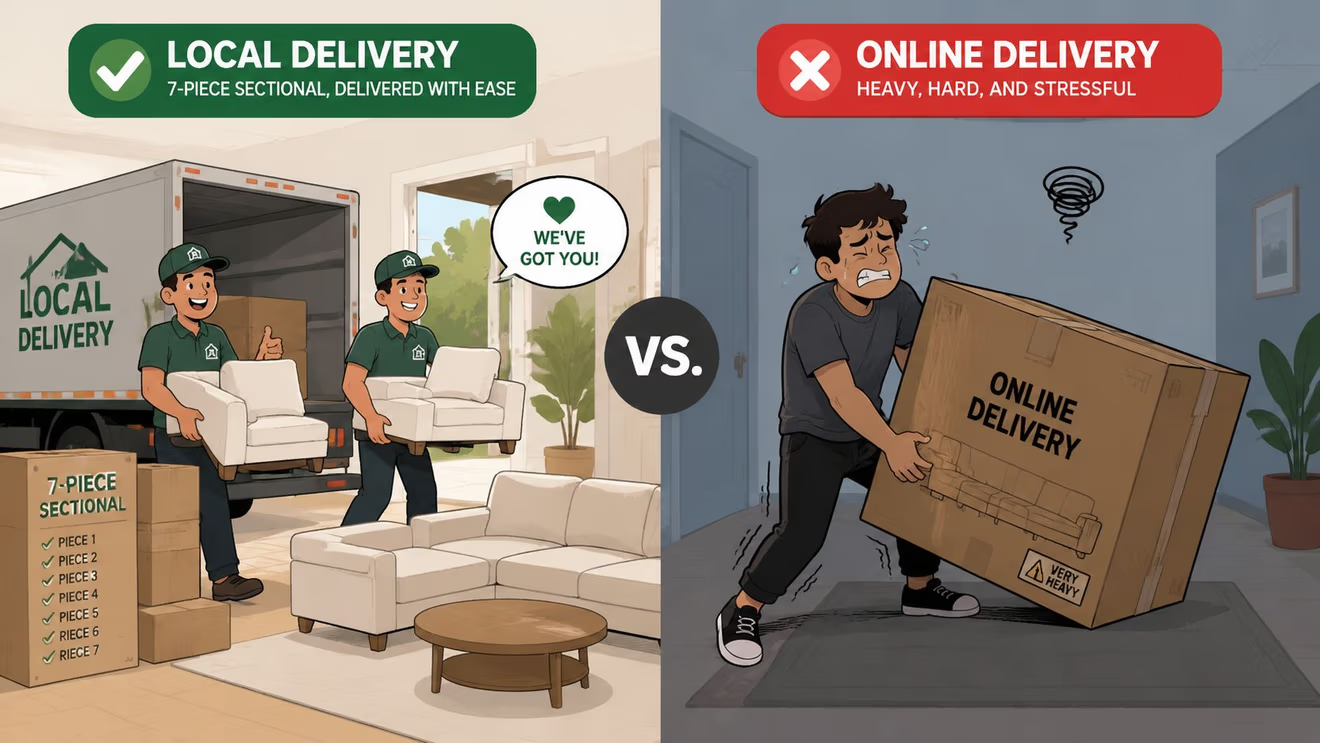
That kind of scale changes the whole delivery conversation.
Big comfort creates real delivery problems
A sectional may come in modules, which helps with maneuvering, but each module still has size, weight, and awkward shape. Corner units can be bulky. Chaise pieces can be long. Power components can be heavier and less forgiving to handle.
Common trouble spots include:
- Narrow stair turns
- Older doorways with trim reducing the opening
- Hallway corners
- Upper-level apartments
- Rooms that need careful assembly placement
A shopper who only looks at the final room may miss the hardest part of the process.
Why local setup matters
Service makes a real difference. A white-glove team doesn't just drop pieces off. They manage the path, bring the pieces in, place them in the room, and assemble them with the layout in mind. For many households, that removes the biggest anxiety from the purchase.
Readers who want the details can learn more about white-glove delivery service.
Delivery day should feel like progress, not a wrestling match with oversized furniture.
That's especially true in Milwaukee homes that weren't designed around extra-large motion sectionals. Come-apart seating can be a practical answer for tight spaces, but it still helps to have experienced people handling the setup.
A hassle-free delivery plan starts well before the truck arrives. It starts with honest measuring, clear communication, and choosing a sectional that fits the home in more ways than one.
Your New Favorite Spot Awaits at BILTRITE
Once the sizing and delivery questions are handled, the fun part starts. The family gets to decide how the sectional should feel. Soft and sink-in cozy. More supportive and upright. Stationary and simple. Or loaded with comfort features.
Many 7 piece sectionals now include features such as power reclining seats, storage chaises, and other engineered components, which is one reason an in-person visit matters so much. Shoppers need to test the mechanisms, the seat feel, and the overall comfort before deciding, as shown in this example of feature-rich modular sectional design.
Try the features before deciding
Power features can sound great on paper, but real comfort is personal. One person may love a deep, lounge-style seat. Another may want firmer support and an easier sit-to-stand feel. A console may be handy for one family and unnecessary for another.
That's why showroom testing helps. Sit in the corner seat. Try the chaise. Open the recliner. Check whether the depth feels relaxing or too deep. Those little details shape whether the sectional becomes the favorite spot in the house.
A family purchase deserves real help
BILTRITE is a fourth-generation, family-owned store serving Metro Milwaukee since 1928, and that family-first approach shows up in how the shopping experience works. The store is proud of its local roots, proud of its better-quality focus, and proud to close on Sundays and Mondays for family time. That's not flashy. It's just honest.
Shoppers in Greenfield can also compare small-scale furniture for tighter spaces, heavy-duty options for busy households, and custom choices in fabric, leather, wood, and finish. That matters because not every living room needs the same answer, even when everyone starts with the same idea of wanting “a big comfy sectional.”
The right 7 piece sectional should support family life, fit the room, and still make sense years from now. When that combination comes together, the living room changes. It becomes the place where everybody naturally ends up.
Ready to find a sectional that fits the room, the doorway, and the way the family lives? BILTRITE Furniture-Leather-Mattresses welcomes shoppers to the Greenfield showroom to sit, test features, compare materials, and get friendly guidance from a team that's been helping Metro Milwaukee homes since 1928.