


Frosted Glass Beads: A Friendly Guide for Home Décor

A soft glow catches the eye across a room. Maybe it's coming from a lamp, a decorative strand, or a small accent that looks less shiny than ordinary glass. That gentle, satin-like appearance often comes from frosted glass beads, a finish that changes how light behaves without turning the bead into a different material.
That distinction helps shoppers choose décor with confidence. Frosting affects the surface, color, care needs, and safety considerations, while the glass underneath remains familiar. Once that's clear, it becomes much easier to decide whether a matte bead belongs on a lamp, around a mirror, in a craft project, or somewhere else in the home.
Table of Contents
- What Frosted Glass Beads Are
- A Quick Look at the Long History of Glass Beads
- How Beads Get Their Frosted Finish
- Where Frosted Glass Beads Shine in Home Décor
- Safety, Finish Types, and What to Ask Before You Buy
- Caring for Frosted Glass Beads So They Last
- Sourcing Tips and a Friendly Next Step
What Frosted Glass Beads Are
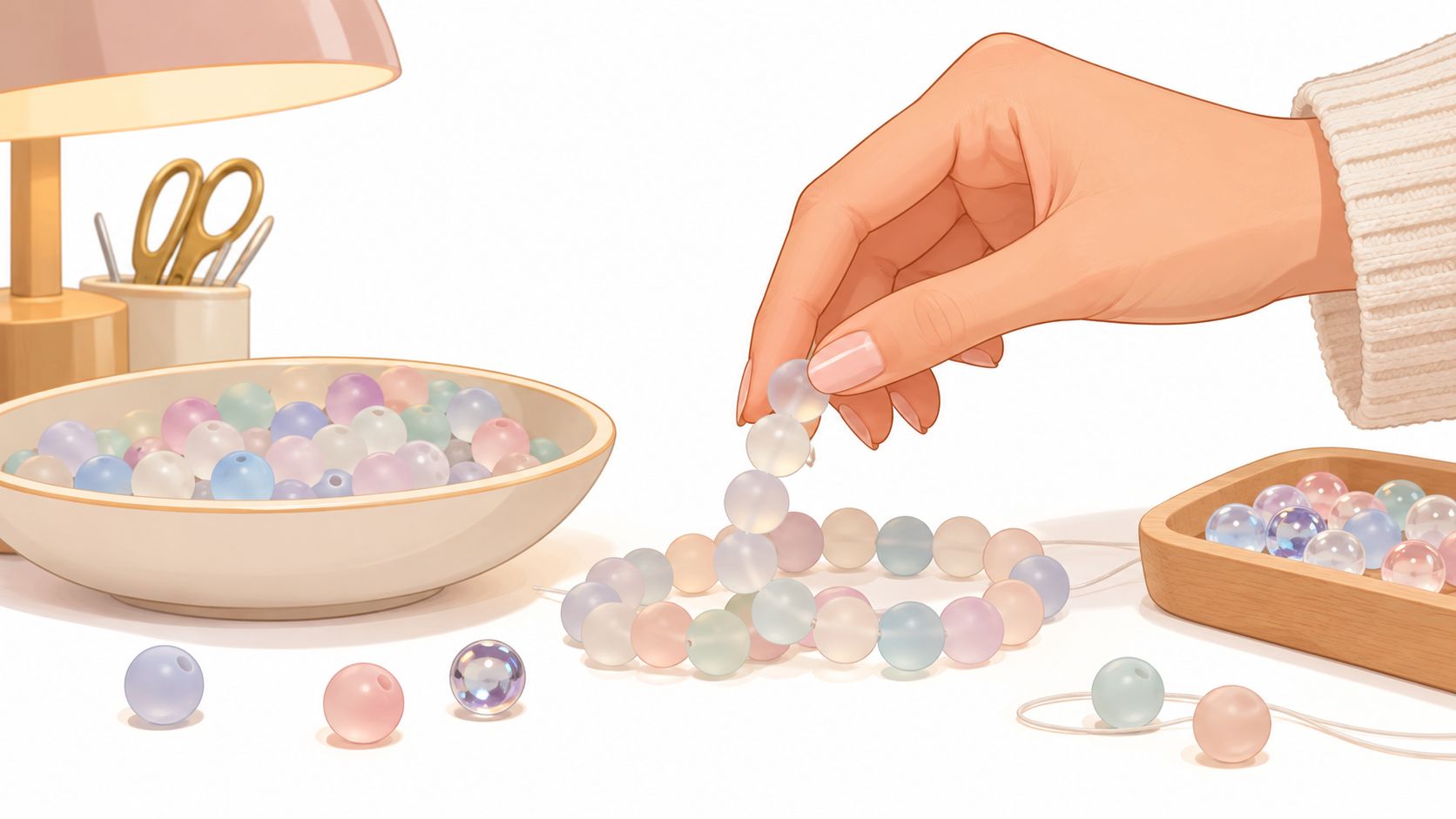
A clear bead throws back crisp highlights. A frosted bead looks softer because its outer surface scatters light instead of reflecting it in one sharp direction. That small surface change can affect how a strand looks beside a mirror, lampshade, or other home accent.
Frosting is a finish, not a separate kind of glass. A typical soda-lime bead formulation contains silicon dioxide at 68–75%, sodium oxide at 12–18%, and calcium oxide at 7–12%, as documented in this soda-lime glass bead safety specification. The frosting changes the surface texture, while the bead's underlying glass remains the same type described in that specification.
Transparency and translucency
A transparent bead lets light pass through clearly enough to reveal detail behind it. A translucent bead also admits light, but scatters it, so the view becomes blurry or softly diffused. Frosted glass commonly has this translucent quality.
A satin-finished vase shows the difference well. A clear vase gives you sharp reflections and a crisp view through the glass. A frosted vase still brightens when light reaches it, yet its surface spreads the glow and conceals fine details.
That behavior matters at a showroom. Near a lamp, frosted beads can soften bright reflections while keeping some sparkle. A blue accent may feel calmer with a matte surface than with a highly polished one, similar to the finish of a blue glass table lamp.
Look for reduced reflection, a soft touch, and diffused light when identifying the finish. The glass underneath has not become a different material. The textured surface gives the bead its quieter appearance, while shoppers should still ask how that finish was made and how permanently it is intended to last.
A Quick Look at the Long History of Glass Beads
A frosted bead on a lamp can look thoroughly modern, yet it belongs to a craft story reaching back thousands of years. The Corning Museum of Glass describes glass beads as representing approximately 3,500 years of human history, including beads from ancient glassmaking sites in the eastern Mediterranean dating to the second millennium B.C.
Those small objects crossed Europe, Africa, the Middle East, North America, and Asia as adornment, trade goods, and cultural objects. Their journeys show why a bead can bring more than color to a room. It can carry a visual link to craft traditions shared across regions.
European glass beads reached the West African coast through trade from the 15th century, and networks carried millions of beads to Africa over the following four centuries, according to the Victoria and Albert Museum's bead collection record. Venice became a major European center for luxury glass production. Bohemia, the Netherlands, and Britain also developed important beadmaking traditions.
The story includes African production, too. Archaeological reports from Djenné-Djenno in modern-day Mali include a glass bead dated approximately 800–300 B.C., a record associated with ancient West African powdered-glass bead production.
For a showroom shopper, this history gives a decorative choice added texture. Frosting supplies the current matte appearance, while the bead's shape and material connect with a globally shared tradition. A strand near a lamp can therefore feel both fresh and timeworn, much like the vintage character of mercury glass table lamps. That connection can help you choose beads for their story as well as their finish.
How Beads Get Their Frosted Finish
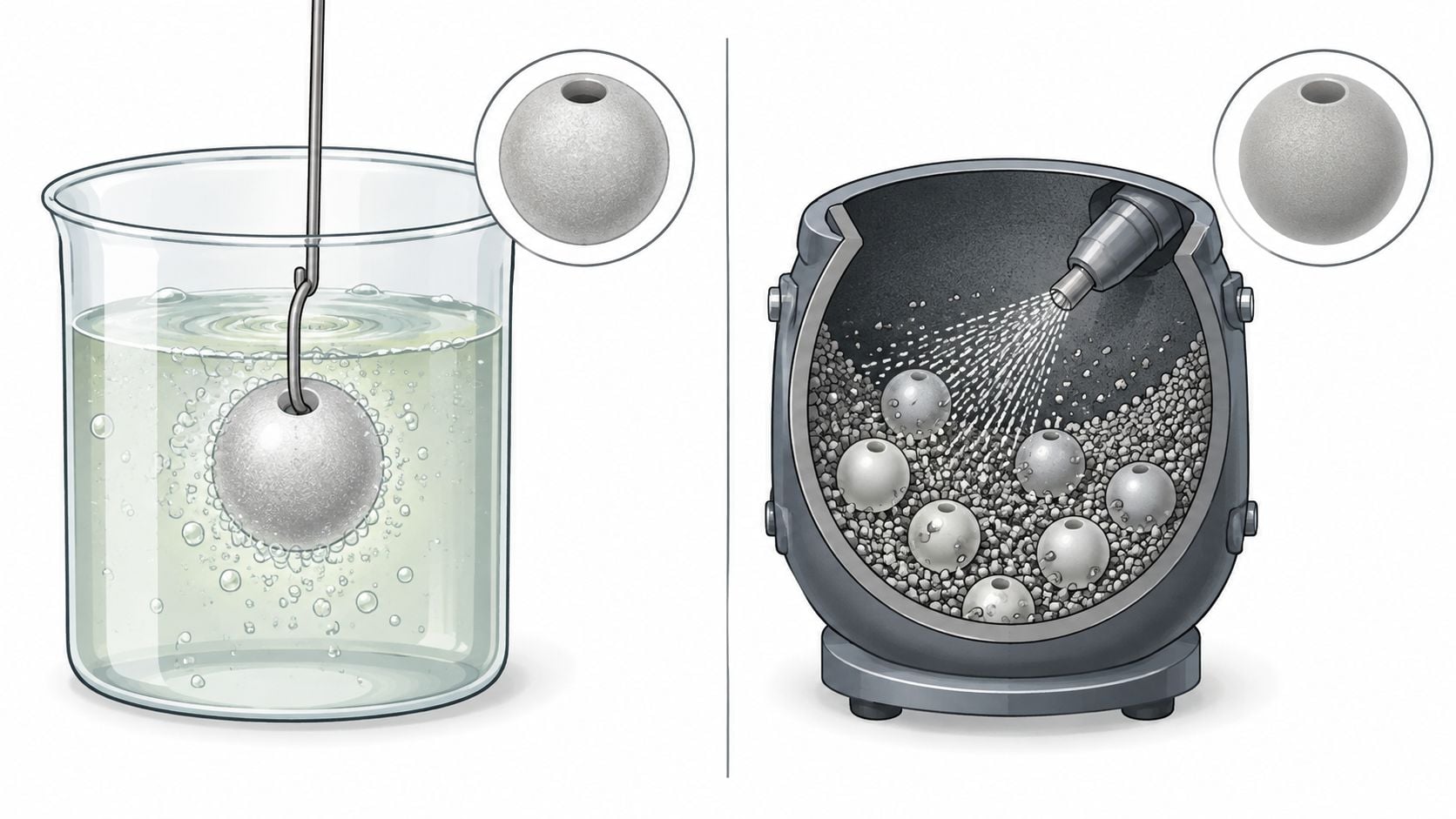
A glossy bead becomes matte when its outer surface gains tiny irregularities. Those irregularities scatter incoming light in many directions, much like a frosted bathroom window spreads daylight instead of reflecting a sharp image.
Makers generally use chemical etching or an abrasive treatment. Chemical etching uses an acid to dissolve a very thin outer layer. Abrasive methods, including sandblasting or tumbling, roughen the surface mechanically with fine particles.
Small textures, visible effects
The texture is too small to see clearly without magnification, but the eye notices its optical result. Bead-blasting research on 0.25 mm glass beads measured raw surface roughness from approximately 0.21 to 2.66 µm, with smaller high-frequency roughness components from 0.13 to 0.86 µm. Those fine features help create the soft matte appearance described in the surface-roughness study.
The final look depends on how the treatment is controlled. Abrasive type, particle size, impact angle, pressure, exposure time, and distance from the nozzle can all affect the texture. A finer abrasive tends to create a more delicate frost, while a coarser treatment can produce a stronger, more pronounced surface.
Chemical exposure changes the result as well. Longer contact can create a deeper etch and a more opaque appearance. That's why two items labeled “frosted” may not match exactly. One might remain lightly translucent, while another looks nearly cloudy.
Practical rule: The useful question isn't simply whether a bead is frosted. It's how much light the finish should scatter and how much glow should remain.
For a décor shopper, the takeaway is straightforward. Frosted glass beads tell a story about surface texture, not a different material underneath. The right finish depends on whether the bead needs to glow, blend in subtly, add tactile detail, or reduce sharp reflections.
Where Frosted Glass Beads Shine in Home Décor
Frosted beads work best where a room needs texture without more visual noise. Their muted surface can add interest to a shiny lamp, soften a bright accent, or bring a handmade feeling to a simple arrangement.
Lighting with a gentler glow
Decorative lighting is a natural fit. Beads can appear on a shade, hang from a fixture, or form part of a decorative strand. Near a bulb, the matte surface can spread light and reduce the hard sparkle produced by polished glass.
A small strand draped around a lamp base can add color without overwhelming the silhouette. For a more collected look, a decorator might combine frosted beads with a neutral shade, warm wood, or a simple ceramic accent.
Trim, edging, and furniture details
Beaded curtains, lamp fringe, and decorative pulls use the bead's shape as much as its finish. A matte bead feels tactile and approachable, especially beside upholstered seating or solid wood furniture.
A frosted pull on a cabinet can introduce a small point of contrast. On a mirror frame, a few beads can soften the transition between reflective glass and the surrounding wall. These details work particularly well in rooms that already include layered textiles and natural finishes. A guide to styling a dining room can help place these accents without making the space feel crowded.
Small accents with a big visual effect
Craft projects offer plenty of flexibility. Frosted beads can fill a clear vase, wrap a candle holder, decorate a seasonal centerpiece, or sit in a shallow bowl on a shelf. A short strand may be enough to refresh an existing object instead of replacing the whole arrangement.
The best placement often comes from contrast. Pair a soft matte bead with polished metal for a little sparkle, or place it beside solid wood and linen for a warmer, quieter combination. If a room currently feels too glossy or busy, a few frosted accents may provide the visual pause it needs.
Safety, Finish Types, and What to Ask Before You Buy
The words glass beads can describe very different products. A small decorative bead intended for craft use isn't the same as crushed or spherical glass used for abrasive blasting, and shoppers shouldn't assume every product is suitable for skin contact, children's projects, or casual home handling.
Dust changes the situation. OSHA warns that abrasive-blasting dust and noise can reach hazardous levels and specifically notes that glass, whether crushed or in bead form, can potentially damage the lungs. The OSHA abrasive-blasting guidance makes the intended use important before anyone sands, crushes, blasts, or otherwise creates airborne particles.
A buyer's finish checklist
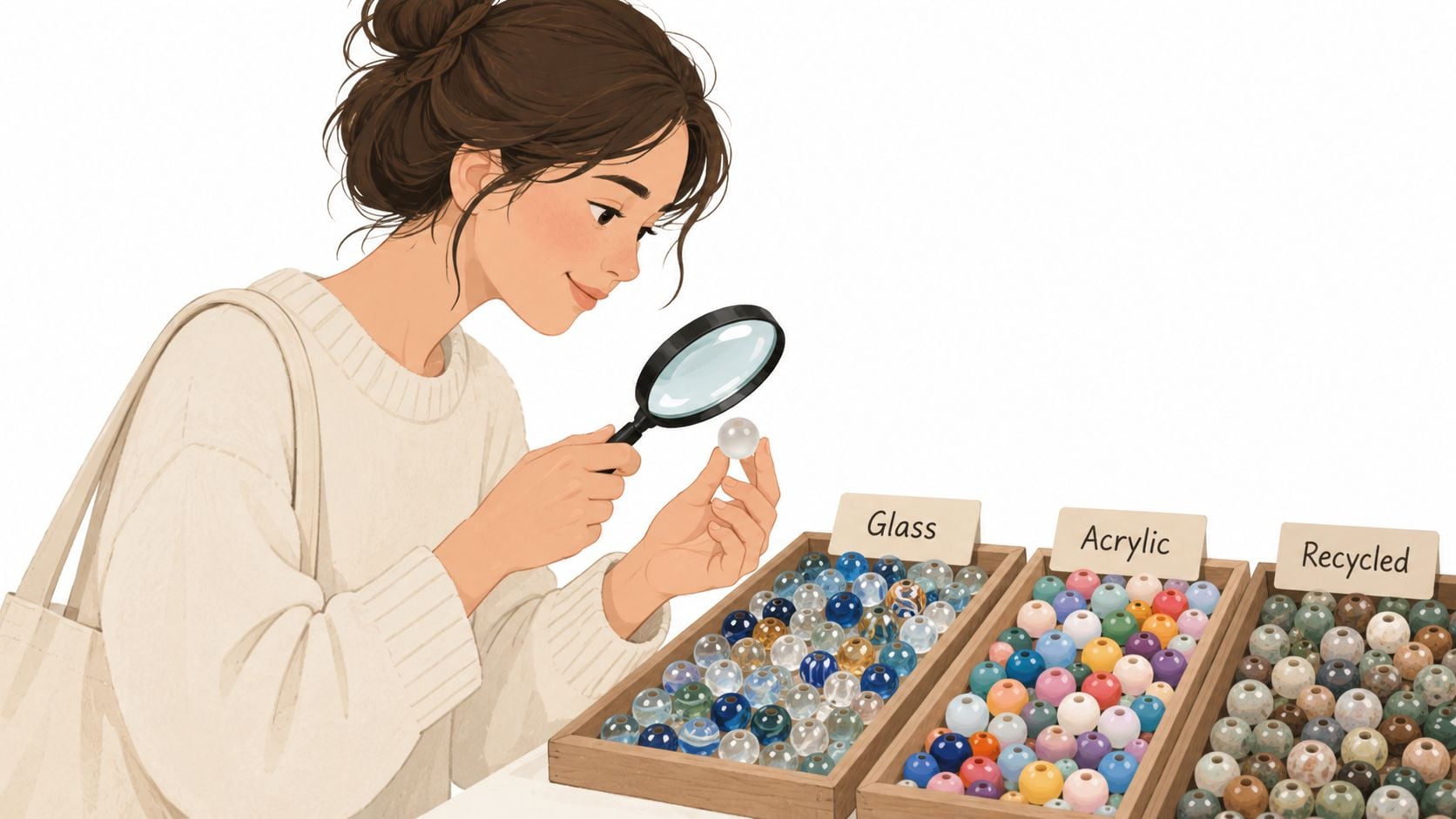
Before purchasing decorative beads, shoppers can ask a few plain questions:
- Intended use: Are the beads labeled for décor or craft use, rather than blasting or industrial finishing?
- Finish method: Is the matte appearance etched into the glass, or does a coating sit on the surface?
- Color source: Is the color part of the glass, dyed into it, or painted on?
- Exposure rating: Can the beads handle water, household cleaning, sunlight, and repeated touching?
- Documentation: Is a safety data sheet available when the product will be used in a workshop or industrial setting?
A coating can look attractive but may respond differently to moisture, friction, cleaners, or ultraviolet exposure. An etched surface is still subject to care needs, but its appearance is not just a thin film that can wear away.
Safety reminder: A solid decorative bead and airborne glass dust are different handling situations. The risk rises when a process creates particles that people can breathe.
Anyone working with mechanical finishing should use ventilation, eye protection, respiratory protection appropriate to the task, and dust containment. Compressed air shouldn't be used to blow dust around occupied spaces. For décor pieces, a shopper can keep the process simple by choosing clearly labeled finished products and following the maker's handling guidance. Surface choices also matter in broader furniture care, including protective coatings.
Caring for Frosted Glass Beads So They Last
A frosted bead can look soft and velvety under showroom lights, yet its textured surface still catches dust. Gentle care keeps that finish even. Start with a soft, dry cloth, then use a barely damp cloth for marks that do not lift easily.
Skip bleach, ammonia, solvents, and abrasive cleaners. Rough sponges and gritty pastes can smooth some spots while leaving others cloudy, much like rubbing one patch of a matte wall until it reflects more light. That uneven appearance may be difficult to restore.
Color deserves separate attention. Undyed frosted beads usually keep their original color, while dyed beads may fade more readily. The result also depends on the coating and base material, as explained in this bead-care guidance.
Do this, not that
- Dust gently: Choose a soft cloth rather than a stiff brush.
- Clean lightly: Wipe with a barely damp cloth instead of soaking the piece.
- Protect the finish: Keep bleach, ammonia, solvents, and abrasive scrubbers away.
- Manage sunlight: Place dyed or coated beads out of harsh, direct light when possible.
- Keep conditions steady: Store beaded pieces away from heat and sudden humidity changes.
A “washable” label describes one kind of exposure, not every household chemical or cleaning method. Before water or repeated rubbing reaches a decorative piece, check the supplier's care instructions. Light cleaning and careful handling are the safest everyday choices, especially for beads used on frequently touched décor.
Sourcing Tips and a Friendly Next Step
A good purchase starts with a clear description. Sellers should identify whether the beads are decorative, explain the base material, describe the finish, and provide cleaning guidance. If those details are missing, shoppers may not know whether the bead is meant for a lamp accent, a craft project, a high-touch pull, or an industrial process.
Finish appearance should also match the job. A lightly frosted bead can add a little glow near a lamp, while a more opaque bead may work better as a quiet vase filler. For furniture accents, durability and touch exposure matter as much as color.
Building a warm, layered look
Frosted glass beads pair naturally with:
- Solid wood: Matte glass keeps wood from feeling too heavy while adding a cool, light-catching detail.
- Leather: The contrast between smooth leather and softly textured glass creates tactile variety.
- Natural textiles: Linen, cotton, and woven materials help a beaded accent feel relaxed rather than flashy.
- Metal finishes: Brushed or polished metal can bring out the bead's gentle highlights.
A small strand can refresh a lamp, mirror frame, shelf, or centerpiece without changing the whole room. Shoppers who are also selecting larger pieces can use this guide to buying quality furniture to think about construction, materials, scale, and long-term care together.
BILTRITE Furniture-Leather-Mattresses is a fourth-generation, family-owned showroom serving Metro Milwaukee since 1928, with affordable better-quality furniture, USA-made and Amish-made pieces, solid wood selections, supportive seating, and a mattress department with over 60 models. The showroom also offers small-scale furniture for apartments, heavy-duty options for families, power lift recliners that are exempt from Wisconsin sales tax, and a friendly team with over 400 years of combined experience.
Come visit BILTRITE Furniture-Leather-Mattresses in Greenfield for a no-pressure, hands-on look at furniture, lighting ideas, and comfortable room arrangements. The team would be glad to help shoppers compare textures, test comfort, and find pieces that make frosted glass accents feel right at home.