




Desk for Small Space: A Friendly Buyer’s Guide


A downtown condo can turn a paint-can closet into an office overnight. A laptop appears on a spare shelf, a chair gets wedged beside the living room window, and suddenly the desktop needs to work hard without making the room feel crowded. A desk for small space has to fit the home, the equipment, and real daily habits, not just look tidy in a catalog photo.
The right choice starts with measurements, not style. Buyers also need to think about monitor depth, chair movement, storage, posture, materials, and whether the desk must disappear when dinner guests arrive. The following guide keeps the advice practical for studios, condos, bedrooms, and senior living spaces, with a clear focus on what can be seen and tested at a local showroom.
Why Finding the Right Small-Space Desk Feels So Hard
Small rooms ask furniture to do several jobs at once. A desk may serve as a work surface in the morning, a homework station in the afternoon, and a place for bills or hobbies later in the day. Many catalog desks assume a spare bedroom or dedicated den, but condo living often offers a corner, a wall, or a narrow stretch beside another piece of furniture.
That mismatch creates a significant problem. Shrinking the desktop can save floor space, but an overly shallow surface may leave no comfortable room for a monitor, keyboard, paperwork, or a lamp. Choosing a large desk solves the work problem while creating another one, a blocked walkway, a crowded chair, or a room that no longer feels restful.
The desk has to multitask
A useful desk for small space should answer a few direct questions:
- What equipment lives on top? A closed laptop needs much less room than a monitor, keyboard, speakers, and notebook.
- Does the desk need to disappear? Folding or hidden designs make sense when the room serves several purposes.
- Where will supplies go? Drawers, shelves, wall storage, and nearby cabinets can keep the desktop clear.
- Who uses the desk? A child doing homework, an adult working full time, and a senior managing paperwork may need different heights, seating, and access.
The broader furniture market supports this shift toward compact, multifunctional pieces. The global small space furniture market has been estimated at $6.681 billion in 2025 and is projected to reach $12.151 billion by 2035, a projection associated with a 6.2% compound annual growth rate, according to Future Market Insights' small space furniture market analysis. That forecast connects small-space furniture with urbanization, apartment living, and the need to fit several functions into limited square footage.
Style matters after function
A 2024 design-community survey found that 77% identified multifunctional space as the biggest work-at-home trend, while 91% said people were more likely to have a home office than an extra sleeping space, as reported by Furniture Today's home-office trend survey. Those findings explain why a small desk needs to be flexible, visually light, and easy to live with.
The practical answer isn't to buy the smallest desk available. It's to find the smallest desk that supports the user's actual device, chair, storage, and movement needs.
Measure First, Then Choose a Desk Style
A tape measure should come out before browsing begins. Measure the wall, the nearby furniture, the doorway, and the path the chair will use. A beautiful desk that can't clear the doorway or leaves the chair trapped against a sofa isn't a bargain.
For compact desks, the practical range is commonly 36 to 48 inches wide and 18 to 24 inches deep, based on The Spruce's small-space desk guidance. Width determines how much can sit side by side. Depth determines whether the setup is comfortable. A closed laptop can work on a shallow surface, but an external monitor and keyboard need room for proper viewing distance and hand placement.
The measurements that decide the fit
Use this reference before choosing a finish or drawer layout.
| Measurement | Ideal Range | Why It Matters |
|---|---|---|
| Desk width | 36 to 48 inches | Provides a compact work surface without assuming a full office |
| Desk depth | 18 to 24 inches | Supports a laptop at the shallow end and a monitor setup closer to the deeper end |
| Work surface minimum | 48 inches wide by 24 inches deep | Supports seated ergonomics for a fuller workstation, according to this home-office ergonomics reference |
| Clear floor behind desk | 42 inches | Allows chair movement behind the desk edge, based on the same ergonomics guidance |
| Knee clearance | 24 inches wide by 18 inches deep by 24 inches high | Keeps the lower desk area usable for seated work, according to this small home-office desk guide |
| Walking path near chair | 24 to 30 inches | Helps preserve circulation in a tight room, according to this small-space placement guidance |
A 24-inch depth is often called the “golden standard” because it can accommodate a monitor and keyboard while preserving a more comfortable viewing distance, as explained by this desk-selection guide. Laptop-only users may manage with less, but a full-time monitor setup should not be squeezed onto a decorative ledge.
Measure the chair route, not just the wall
Pull the chair out from the desk and measure the route behind it. The clearance recommendation in the plan may be roughly 24 to 28 inches behind the seat, while the walking path beside the setup should remain open enough for normal movement. Keep the chair from blocking a closet, bedroom door, or primary route through the room.
Legroom width matters, too. A desk with drawers placed directly under the user can look compact but make the seating position awkward. Standard seated height is commonly around 29 to 30 inches, and height affects whether the chair can slide under the desk, whether elbows rest comfortably, and whether the user can type without raising the shoulders.
For a more detailed room-measuring process, use BILTRITE's guide to measuring for a home office desk. The simple rule is worth keeping: measure the equipment, the chair, and the walking route before choosing the style.
Small-Space Desk Styles Worth Knowing
The best desk style depends on how the room changes during the day. A fixed writing desk may suit a dedicated corner, while a hidden desk earns its keep in a living room that must switch back to family use. The comparison below focuses on the job each style performs rather than treating every compact desk as interchangeable.
| Desk Style | Typical Footprint | Best For |
|---|---|---|
| Writing desk | Slim, open under the top | Laptop work, paperwork, and uncluttered rooms |
| Wall-mounted or floating desk | Minimal floor use | Studios, narrow walls, and occasional work |
| Corner desk | Uses two adjoining walls | Empty corners and users needing more surface |
| Ladder desk | Vertical storage with a compact base | Bedrooms, living rooms, and readers who need shelves |
| Drop-leaf or gate-leg table | Expandable surface that folds away | Multi-use rooms and occasional work |
| Standing desk | Compact adjustable or fixed standing surface | Users who want posture changes without a full office |
| Hidden or convertible desk | Disappears into another piece | Living rooms, guest rooms, and highly flexible layouts |
Open designs for everyday work
A writing desk is the straightforward choice for a laptop user who wants a light visual footprint and easy chair access. It suits a living room corner or bedroom wall, especially when storage can move to a nearby shelf.
A wall-mounted desk frees the floor beneath it and can make a narrow room feel more open. It needs secure installation, ideally into appropriate wall support, and it may not suit renters or users who want to move furniture often.
A corner desk turns an unused angle into a workstation. It's a good fit for someone who needs separate areas for a monitor and paperwork, but it can become difficult to access if both sides extend too far into the room.
Vertical and folding solutions
A ladder desk sends storage upward instead of outward. It works well in a bedroom or living room where a few shelves can hold office supplies, books, and décor without adding another cabinet.
A drop-leaf or gate-leg table is the neighborly answer for a room that needs to change jobs. It can support homework or paperwork, then fold down when floor space is needed for guests.
A standing desk can be useful, but a full adjustable frame may consume more floor space and reduce drawer options. In a tight room, a sit-stand converter placed on a stable fixed desk can offer posture changes without replacing the entire workstation.
Desks that disappear
Hidden and convertible desks include secretary-style cabinets, wall beds with integrated work surfaces, and designs that tuck behind or into another piece. They're best for people who work part time from a shared room and care more about closing the office away than keeping every accessory on display.
BILTRITE's modular furniture for small spaces can help shoppers think beyond a single desktop, especially when storage, seating, and room flexibility need to work together. The happiest buyer is the one who chooses a style based on daily use, not just on the promise of saving a few inches.
Ergonomics and Materials That Make a Compact Desk Work
A compact desk can be comfortable, but only if the chair, screen, keyboard, and surface work as a set. Start with the chair. In a tight room, an armless chair or compact task chair often slides in and out more easily than a bulky chair with wide arms, while a stool may work for short periods but isn't the first choice for long work sessions.
Set the monitor roughly an arm's length away and keep the top of the screen near eye level. If the desk lacks depth, a laptop riser with an external keyboard can separate the screen from the hands. That arrangement protects the neck without forcing the user to work with the laptop flat and too close.
Practical rule: A shallow desktop should change the accessory plan, not force the user into poor posture.
Sit-stand choices in a tight room
Standing isn't automatically better if it blocks movement or creates an unstable work surface. Guidance for small sit-stand desks recommends a dynamic load capacity of at least 200 to 250 pounds, and it favors alternating posture rather than standing for prolonged periods, as described in this small-office sit-stand guide.
That tradeoff deserves an honest look. A fixed desk paired with regular walk-around breaks may be the smarter choice when floor space is limited, drawer storage matters, or the user doesn't need frequent height changes. A converter can provide another option, but it adds equipment on top of the desk and may reduce the usable work surface.
Material choices that affect daily life
| Material | Durability | Best For | Watch Out For |
|---|---|---|---|
| Solid wood | Strong, repairable, and able to develop character with use | Daily work and long-term ownership | Heavier to move and often less forgiving of poor placement |
| Veneer over MDF | Consistent appearance and practical stability | Budget-conscious rooms with moderate use | Edges and surfaces need care around moisture and impact |
| Metal frame with wood or manufactured top | Sturdy support with a lighter visual feel | Modern rooms and adjustable designs | Hardware, wobble, and surface quality deserve close inspection |
Solid wood is especially appealing when the desk gets bumped, repositioned, or used by several family members. Veneer can make good sense when weight and price matter more, while metal frames suit buyers who prefer a clean, contemporary look.
A local option such as BILTRITE's American-made desks and chairs gives shoppers a chance to sit down, test the relationship between chair and desk, and inspect the materials before deciding. The useful test is simple: type, reach, pull out the chair, and check whether the desk still feels calm and stable.
Placement Ideas for Apartments, Condos, and Senior Living
A desk doesn't need to announce itself as an office. In a small home, placement can make the workstation feel intentional instead of squeezed into whatever space remains.
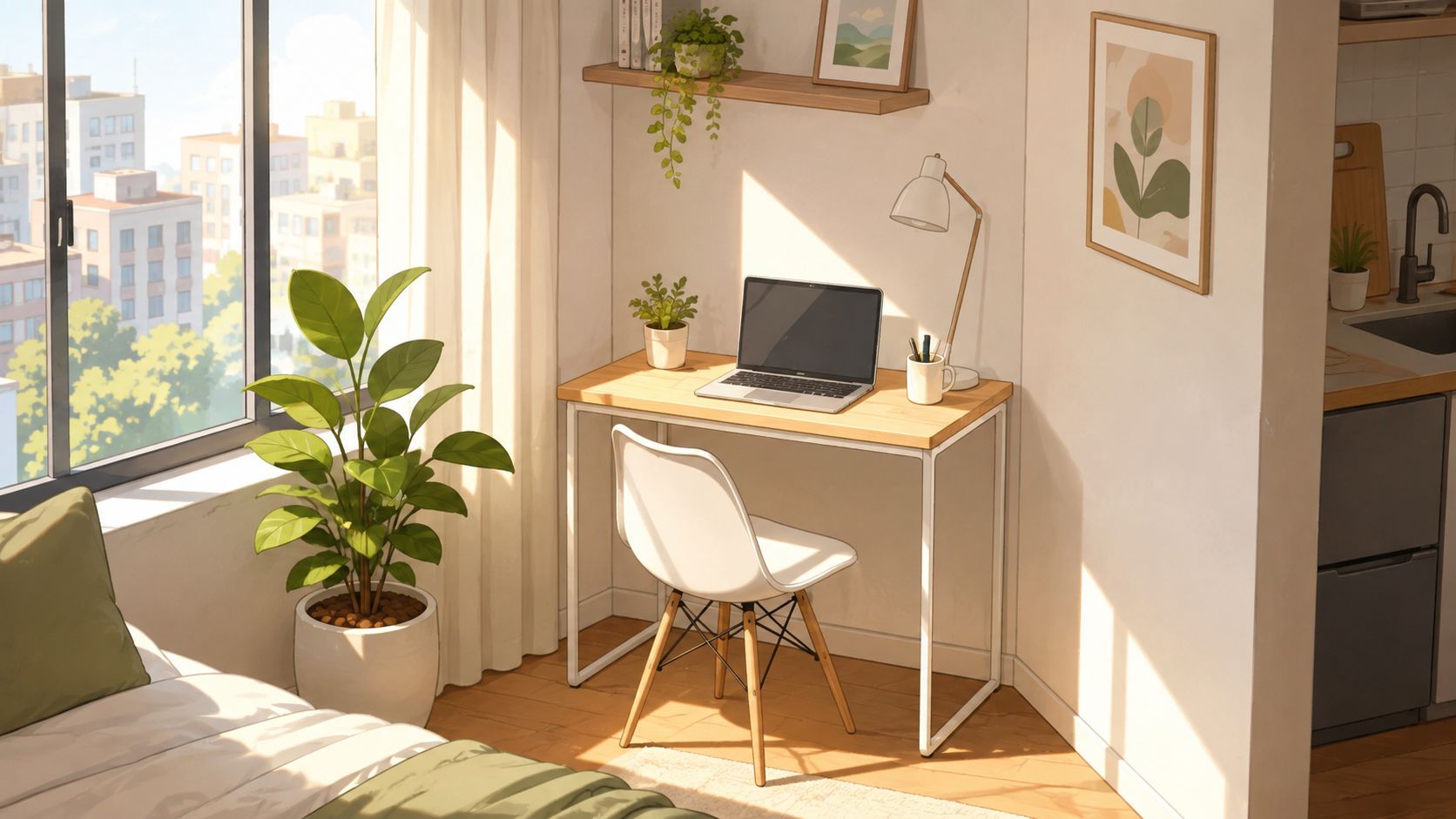
A studio corner beside the window
A studio apartment dweller may find an unused corner beside the living room window. A narrow writing desk can face the light, while a wall shelf holds notebooks, chargers, and a small lamp. The desk remains visually open, and the shelf moves supplies upward instead of stealing floor space.
The window should provide light without placing the screen directly in glare. A slight angle can preserve brightness while keeping the monitor easier to read.
A bedroom nook that changes jobs
A condo bedroom nook can support homework, remote work, or bill paying with a drop-leaf desk. The surface comes down when needed, then folds up to release floor space for dressing, laundry, or a clear walkway.
This arrangement works best when the chair has a simple profile and can move elsewhere after work. A nearby wall pocket or shelf keeps the daily items together without filling the desktop.
A senior living or multi-use room
Senior living spaces need access and steadiness more than cleverness. A stable, height-appropriate desk with rounded edges, easy-access drawers, and task lighting can support reading, bills, and video calls without dominating the room.
Place the desk near a window for natural light, but keep the screen out of direct glare. Leave the route to the chair open, and choose hardware that feels easy to grasp. BILTRITE's furniture for small condos reflects the same practical concern, furniture should fit the room while still feeling comfortable and substantial.
Why a Quality USA- or Amish-Made Small Desk Is Worth It
A small desk often gets more handling than a large office desk. It may be pulled away from a wall for cleaning, shifted to make room for guests, or repositioned when the room's main purpose changes. That makes construction important. A desk that feels sturdy at the showroom can be a better long-term choice than one that only looks compact on paper.
Solid-wood construction, dovetailed drawers, and careful finishes give buyers useful details to inspect. Dovetail joinery can signal careful drawer construction, while a consistent finish and well-fitted hardware contribute to the everyday feel of the piece. These aren't decorative footnotes. They affect how the desk feels each time a drawer opens or a hand rests on the top.
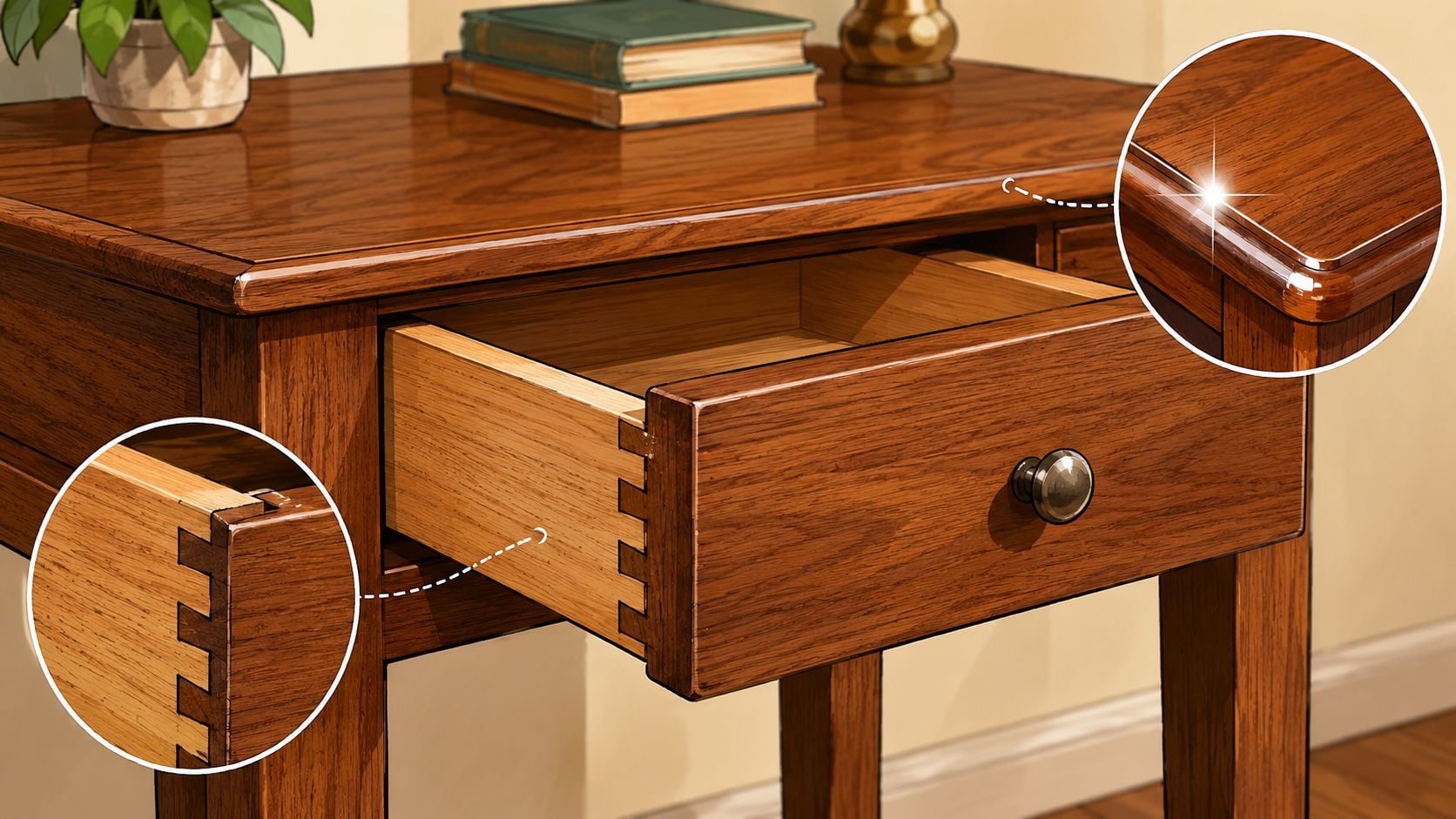
Fit can be part of the craftsmanship
Small rooms rarely have standard needs. One buyer may need an exact width between a wall and a bookcase. Another may need a shallower top, a left-hand drawer, or a right-hand drawer to keep a walkway clear. Custom options such as width, depth, drawer orientation, wood, finish, and hardware can solve problems that flat-pack furniture can't address.
USA- and Amish-made furniture also gives shoppers a direct way to examine wood grain, joinery, finish, and proportions before committing. This guide to the advantages of buying furniture made in the USA offers useful context for buyers who value domestic craftsmanship and local purchasing.
See the piece before it comes home
A showroom visit answers questions that a product listing can't. Does the chair slide under the desk? Does the drawer glide smoothly? Does the finish look warm in person? Does the desk feel stable when a user leans forward to write?
BILTRITE Furniture-Leather-Mattresses is a fourth-generation, family-owned business serving Metro Milwaukee since 1928. The store focuses on affordable, better-quality furniture, including USA-made, Amish-made, and solid-wood pieces, with both in-stock selections and custom options. The sales associates bring over 400 years of combined experience, so shoppers can ask practical questions without being pushed toward a particular style.
Quality doesn't mean choosing the most expensive piece in the room. It means choosing construction, fit, and materials that make sense for the desk's daily workload.
Your Next Step and a Quick Pre-Visit Checklist
A showroom visit goes faster when the measurements come along. The goal isn't to memorize every desk dimension. It's to give the furniture team enough information to help narrow the choices and catch problems before delivery.
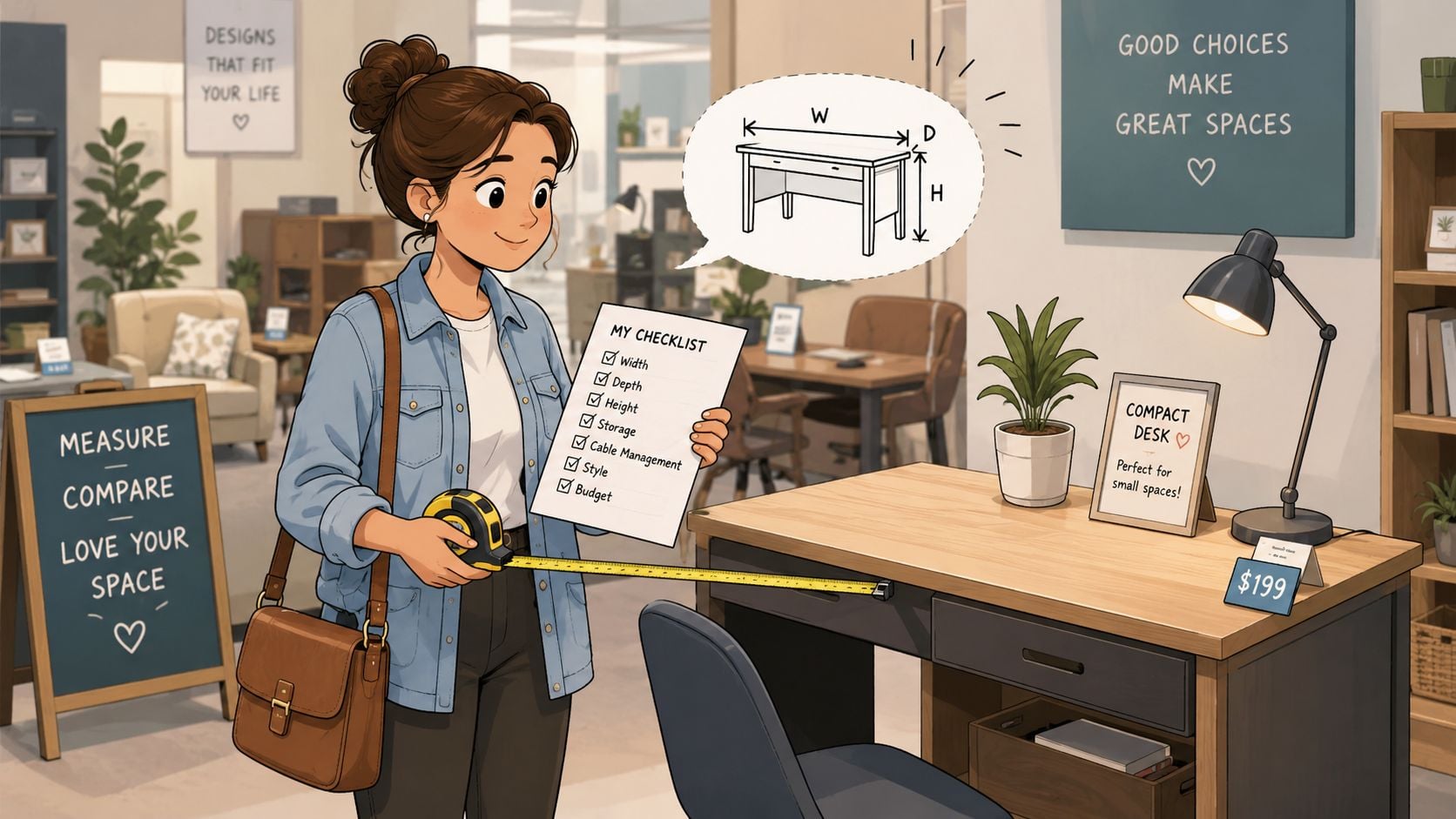
Bring these details
- Tape measure: Record the available wall width, depth, and chair clearance.
- Room photos: Show nearby doors, windows, trim, outlets, and furniture.
- Chair information: Bring the chair or note its seat height, arm width, and overall depth.
- Device dimensions: Measure the laptop, monitor, keyboard, stand, and any frequently used equipment.
- Delivery constraints: Note narrow doorways, stairways, elevators, and tight turns.
- Daily-use notes: Decide whether the desk must fold, provide drawers, support paperwork, or serve more than one person.
Inspect before choosing
Open every drawer and feel the glide. Look at how the wood grain meets at the edges, compare finish samples under showroom lighting, and ask whether the width, depth, drawer location, or hardware can be customized. Sit at the desk with the intended chair, place hands where the keyboard will go, and check whether the posture feels natural.
BILTRITE's Greenfield showroom is located at 5430 West Layton Avenue in Greenfield, Wisconsin. The store doesn't sell online and is closed on Sundays and Mondays for family time, so a visit is the right way to see in-stock and custom small-space desk options up close.
BILTRITE Furniture-Leather-Mattresses offers small-scale home office furniture, USA-made and Amish-made desks, custom options, and more than 60 mattress models in its Greenfield showroom. Bring the measurements, room photos, and chair details, then visit BILTRITE Furniture-Leather-Mattresses to compare the fit and feel with the local team.