Bed for Disabled: A Milwaukee Buyer’s Guide


A lot of families start this search the same way. Someone has begun struggling to get in and out of a standard bed. A spouse is losing sleep from helping with every transfer. An adult child is trying to make a parent's bedroom safer without turning the whole room into something that feels cold or clinical.
That's where the question of a bed for disabled adults gets real. It stops being a furniture question and becomes a daily living question. Can this person get into bed safely? Can a caregiver help without straining their back? Will the bed fit the room, the doorway, and the rhythm of life at home?
Those questions matter to a lot of households. The CDC reports that 28.7% of U.S. adults, more than 1 in 4, have some type of disability, including 12.2% with a mobility disability that can make getting in and out of a standard bed difficult or unsafe, according to the CDC disability infographic.
In Milwaukee-area homes, the challenge often has an extra layer. Bedrooms may be upstairs. Hallways may be narrow. Older bungalows, ranch homes, condos, and apartments don't always leave much room for bulky equipment. That's why broad online advice often falls short. It may explain bed types, but it usually doesn't help much with doorway clearance, room layout, or how a bed will work day to day.
Some families begin by browsing senior living furniture and mattresses because they know they need something safer, but they aren't sure whether they need a lifestyle adjustable bed, a hi-low design, or something more clinical. That uncertainty is normal.
Table of Contents
- Finding Comfort and Safety at Home
- Why the Right Bed Is More Than Just a Bed
- A Friendly Guide to Different Bed Types
- Essential Features for Safety and Comfort
- Pairing the Right Mattress With Your Frame
- Planning for Your Home and Safe Transfers
- Your Next Steps with BILTRITE in Milwaukee
Finding Comfort and Safety at Home
Families rarely shop for a bed for disabled adults because they want something fancy. They shop because something at home isn't working anymore.
Maybe a husband has started sleeping in a recliner because lying flat is uncomfortable. Maybe a daughter notices that her mom braces against the nightstand every morning just to stand up. Maybe a caregiver is doing more lifting than is safe. Those are the moments that turn “someday” into “this needs attention now.”
Daily life gets easier when the bed matches the person
The right bed supports more than sleep. It supports dignity, routine, and independence. When a bed sits too high, the user may slide down awkwardly or rely on someone else for help. When it sits too low, standing becomes harder and more tiring. If the bed doesn't adjust, small discomforts can turn into long nights.
A better setup can help with very ordinary moments:
- Getting in and out of bed
- Changing positions during the night
- Reading or resting upright
- Helping a spouse or caregiver assist safely
- Making the bedroom feel usable again
A good home bed solution shouldn't force the person to adapt to the furniture. The furniture should adapt to the person.
Home fit matters just as much as bed features
Many buyers get stuck at this point. They understand that adjustable features sound helpful, but they don't know what will fit their room or lifestyle.
A family in a Milwaukee bungalow may need a bed that can be delivered through a tighter stair turn. Someone in a condo may need a frame that looks less medical and works in a smaller bedroom. Another household may need more clearance underneath because a lift device could become necessary later, even if it isn't needed yet.
That's why the best shopping process starts with practical questions:
- Who is using the bed, and what movement is hardest right now?
- Will another person be helping with transfers or repositioning?
- How much bedroom space is available around the bed?
- Does the bed need to look residential rather than clinical?
- Could the person's needs change over time?
When families slow down and answer those questions first, the search gets much clearer.
Why the Right Bed Is More Than Just a Bed
A bed can either reduce stress in a home or add to it every single day. That's why choosing a bed for disabled adults deserves more thought than picking a style from a photo.

Safety starts with ordinary movements
Most bedroom injuries don't happen because anyone is doing something unusual. They happen during normal routines. Sitting down. Standing up. Scooting over. Reaching for a walker. Helping someone turn.
If the bed height is wrong or the sleeper can't reposition easily, those everyday motions become harder. The person using the bed may feel unsteady. The caregiver may twist, pull, or lift in ways that are rough on shoulders and backs. Over time, fatigue builds up for everyone.
A better bed can help by making movements more controlled. Raising the head can make it easier to get upright. Adjusting the legs can improve comfort. Changing the overall height can make transfers less awkward.
Home care has become more important
This decision matters even more because more care now happens outside hospitals. The King's Fund hospital bed data reports that the number of overnight hospital beds in England fell by 56% between 1987/88 and 2023/24, while care shifted toward same-day treatment and community-based services.
That doesn't mean every home needs medical equipment. It does mean homes are carrying more of the burden. Bedrooms are doing more work than they used to. For many households, the bed is no longer just where someone sleeps. It's also where they recover, manage symptoms, rest during the day, and receive help from family.
Practical rule: If a bed affects transfers, breathing comfort, repositioning, or caregiver strain, it's not “just furniture” anymore. It's part of the care plan.
Comfort affects the whole household
When the bed works well, everyone feels the difference. The user may need less assistance. The caregiver may move more safely. A partner may sleep better because the person in bed is more settled and supported.
That's one reason many families also start reading about related sleep support, such as the benefits of a firm bed. Firmness alone won't solve transfer problems, but overall sleep support still matters.
Here are a few signs the current bed may no longer be serving the household well:
- Transfers feel risky: The person slides, drops, or struggles to line up with the mattress edge.
- Caregiving feels physical: Helping with small tasks now takes noticeable lifting or bracing.
- Sleep posture is poor: The person stacks pillows, sleeps half-sitting up, or wakes sore.
- The room isn't functioning: Walkers, wheelchairs, or helpers don't have enough space to move around the bed.
When families notice two or more of those issues, it's usually time to look at the bed itself, not just the mattress on top.
A Friendly Guide to Different Bed Types
Not every bed for disabled adults looks the same, and not every person needs the same level of support. That's where buyers often get overwhelmed. The names sound technical, and the photos online don't always show what daily use will feel like.
A simple way to think about it is this. Some beds are built mainly for comfort and convenience. Others are built mainly for transfer safety and caregiving. A few are designed for more intensive home care needs.
Bed types at a glance
| Bed Type | Best For | Key Feature |
|---|---|---|
| Adjustable bed | Mild mobility needs, comfort, posture changes | Raises head and foot sections |
| Low or hi-low bed | Safer transfers, fall reduction, caregiver help | Changes overall bed height |
| Hospital-style bed | More involved care at home | Clinical positioning and assist options |
| Heavy-duty bed | Higher load demands and long-term durability | Reinforced frame and support |
A broad overview of frame styles can also help when comparing bedroom setups, and a simple guide to types of bed can make the category names less confusing.
Adjustable beds for everyday comfort
An adjustable bed is often the least intimidating option. It usually looks more like standard bedroom furniture and less like medical equipment. The head and foot can be raised, which can help someone sit up, rest more comfortably, or reduce the effort of getting settled.
This type often works well for adults who still move fairly independently but want less strain. It can also be a strong fit for couples who want a more residential look.
Common reasons families choose this style:
- Sitting up is easier: The sleeper doesn't need a pile of pillows.
- Leg elevation helps comfort: Swelling, fatigue, or general discomfort may feel more manageable.
- The room keeps a home feel: Many designs blend in better with existing furniture.
The limitation is that not every adjustable base changes the full bed height. If transfer height is the main problem, a standard adjustable bed may not go far enough.
Hi-low and low beds for safer access
A low bed sits closer to the floor to reduce the distance of a fall. A hi-low bed does more. It lowers for transfers or safety, then raises for caregiving tasks like dressing, repositioning, or linen changes.
For many households, such an arrangement holds significant practical value. The same bed can serve the person using it and the person helping them. That can be a major relief in homes where a spouse or adult child provides most of the care.
Many families don't need the most clinical bed. They need the bed that lowers enough for safer entry and raises enough to save the caregiver's back.
These beds are especially useful when the person:
- uses a wheelchair for some or all transfers
- has a history of slipping or falling from bed
- needs regular help with movement in bed
- may need changing mobility support over time
Hospital-style and heavy-duty beds
A hospital-style bed usually offers more care-focused features. That may include a stronger hi-low range, assist compatibility, side options, and a frame designed for frequent repositioning.
This kind of bed often makes sense when the user spends significant time in bed or needs regular help from a caregiver. It may not be the most attractive option in every room, but it can be the most practical when daily care is complex.
A heavy-duty bed focuses on strength and long-term durability. Buyers should think about this category when they need a reinforced frame, more stable support, or a setup that must handle repeated caregiving activity without feeling flimsy.
A few reminders can keep the search grounded:
- Don't shop by label alone. One “adjustable” bed may be built for comfort, while another is built for care tasks.
- Think about tomorrow, not just today. A bed that works only for current needs may become limiting quickly.
- Match the bed to the hardest task. If the biggest issue is standing, transfer height matters. If the biggest issue is repositioning, articulation and support matter more.
Essential Features for Safety and Comfort
Bed categories are useful, but features are what decide whether the setup works in real life. Two beds may look similar on paper and feel completely different once someone tries to transfer into them.
Height adjustment changes everything
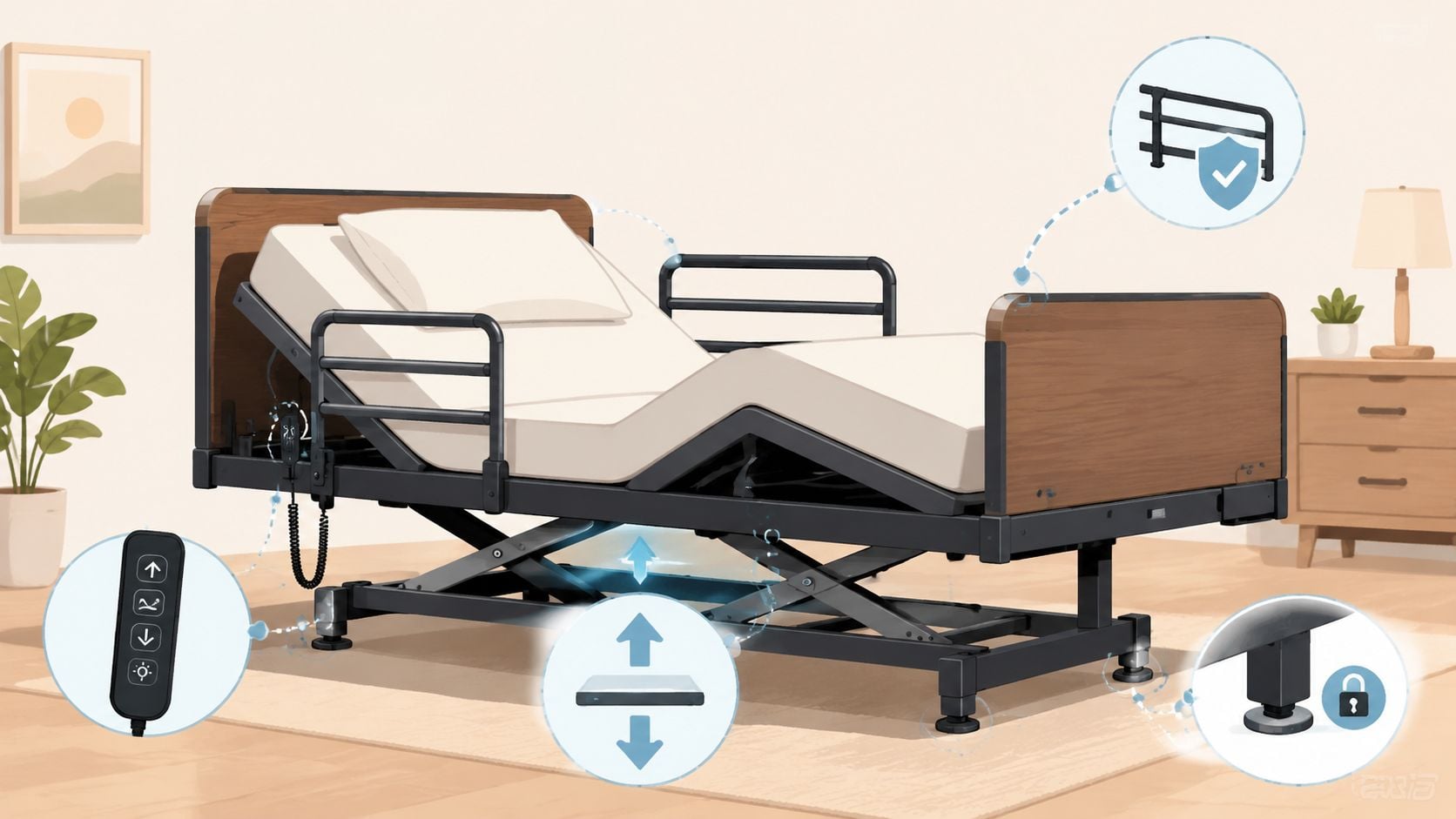
For many users, height adjustment is the feature that makes the biggest difference. A motorized adjustable bed can address several problems at once. The SleepSafe adjustable bed specifications describe height ranges from about 7 inches to 30 inches from frame to floor, which shows why these beds can help both transfers and caregiver access.
That range matters because one height rarely serves every task well. A lower position can make getting in from a wheelchair or seated position easier. A higher position can bring the sleeper up to a level that's less punishing for the person assisting.
The features worth checking in person
Families can use this checklist when evaluating a bed for disabled adults.
- Powered height control: This matters if transfers are difficult or if caregivers help often. Manual workarounds get old fast.
- Head and foot articulation: These adjustments help with posture, comfort, and reducing the need to pile up pillows.
- Stable edge feel: The mattress and frame should feel secure when someone sits at the side before standing.
- Remote simplicity: Buttons should be easy to understand and easy to press, especially for users with limited dexterity.
- Side support options: Some people need a little reminder of the bed edge. Others need more substantial protection.
- Solid frame construction: A shaky bed feels unsafe, even if the listed features sound good.
A helpful showroom habit is to test the bed in the order it will be used at home. Sit on the edge. Stand up. Sit back down. Raise the head. Lower the height. Have the caregiver stand next to it. That simple sequence reveals a lot.
The best-looking bed isn't the best choice if the user hesitates every time they sit down on it.
Another point buyers sometimes miss is the difference between comfort features and safety features. Massage, preset positions, and attractive upholstery may be nice to have. They're not the first things to judge. Transfer height, steadiness, controls, and support usually deserve priority.
Small details can make daily care much smoother
A bed doesn't have to feel institutional to be practical. Some of the most useful details are quiet and easy to overlook:
- Clear access under the frame for certain lift setups
- Easy-to-clean surfaces in homes where hygiene care is part of the routine
- Reliable movement without jerking or loud mechanical noise
- Enough frame strength to handle repeated sitting, turning, and assistance over time
That's why buyers do better when they focus less on the sales label and more on what the bed has to do every morning, every evening, and sometimes in the middle of the night.
Pairing the Right Mattress With Your Frame
Once the frame is chosen, the next question usually pops up right away. Can any mattress go on it? The short answer is no.
Not every mattress bends the same way
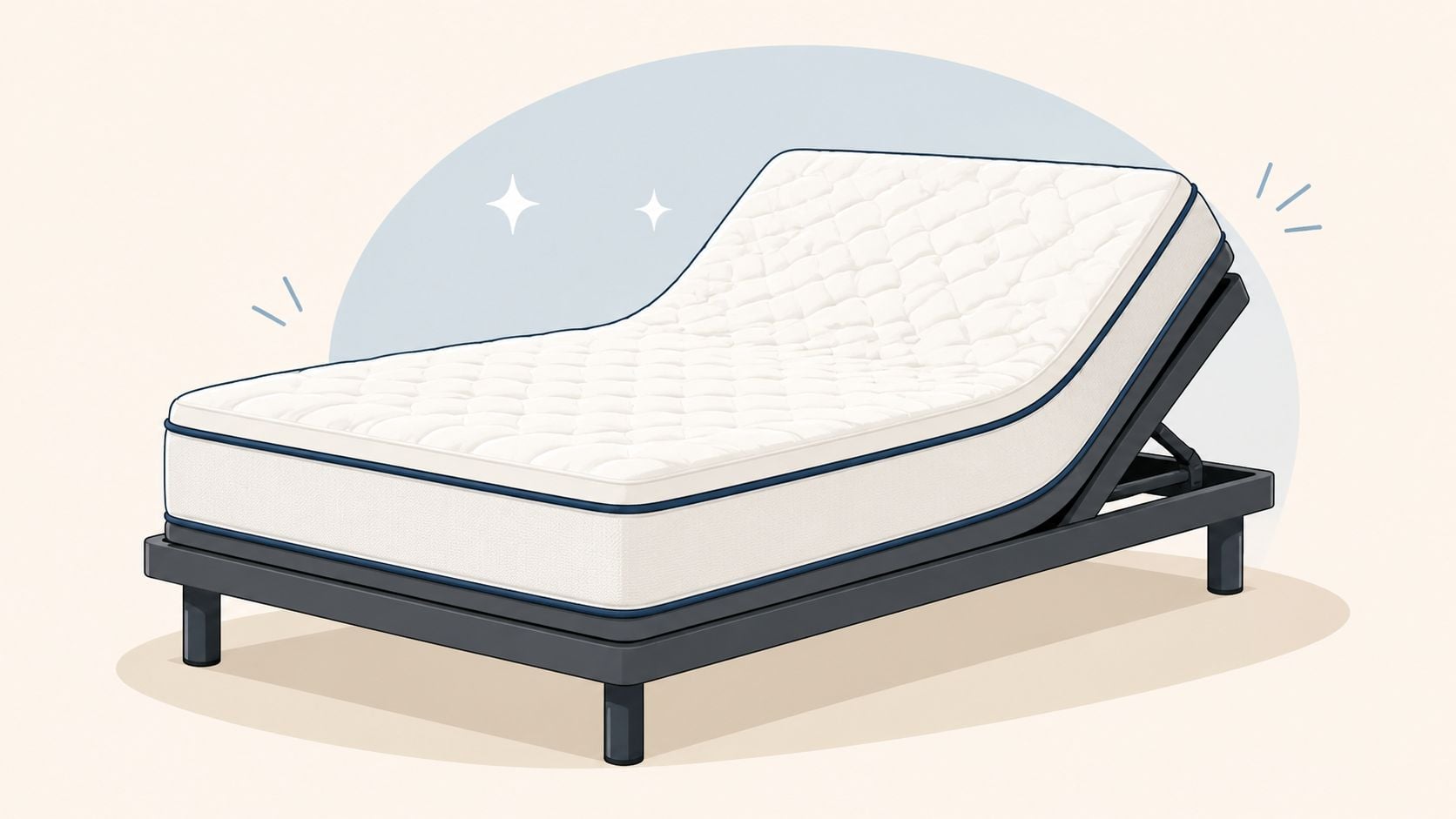
A bed for disabled adults often needs a mattress that can move with the frame instead of resisting it. If the base raises at the head or foot, the mattress has to flex smoothly. If it's too rigid, it may bunch, fight the mechanism, or create awkward pressure points.
That's why mattress compatibility matters so much on adjustable and hi-low setups. The frame does the lifting and positioning, but the mattress is still the surface the body feels all night.
A few buying questions help narrow the field:
- Does the mattress flex cleanly with the base?
- Does the edge feel supportive when sitting before a transfer?
- Will the surface feel stable during movement, not squishy or slippery?
- Is the height of the full setup workable for the user?
Many shoppers also find it helpful to review a basic guide on how to choose the right mattress before testing combinations in person.
Comfort, support, and everyday practicality
This is where personal preference still matters. One person may want a more supportive feel that makes turning easier. Another may need more cushioning for comfort through the shoulders, hips, or heels. The right balance depends on mobility, time spent in bed, and whether the user can reposition independently.
For households using an adjustable frame, durability also deserves attention. A mattress that will bend regularly should hold its shape well and wear evenly. That's one reason some families like flip-able or two-sided options when they suit the frame and use case. Longevity matters when the bed will see daily use and the setup is expected to last.
A supportive mattress should work with the bed, not fight it.
The best way to judge mattress feel is still simple. Test the actual movement. Raise the head section. Sit at the edge. Roll slightly. Return the frame flat. If the mattress stays cooperative and the sleeper feels secure, that pairing is doing its job.
Planning for Your Home and Safe Transfers
This is the part many online guides skip. A bed may look right in a photo and still be wrong for the house. Before ordering any bed for disabled adults, the family should think through the route into the home and the working space around the bed.
Measure the path before delivery day
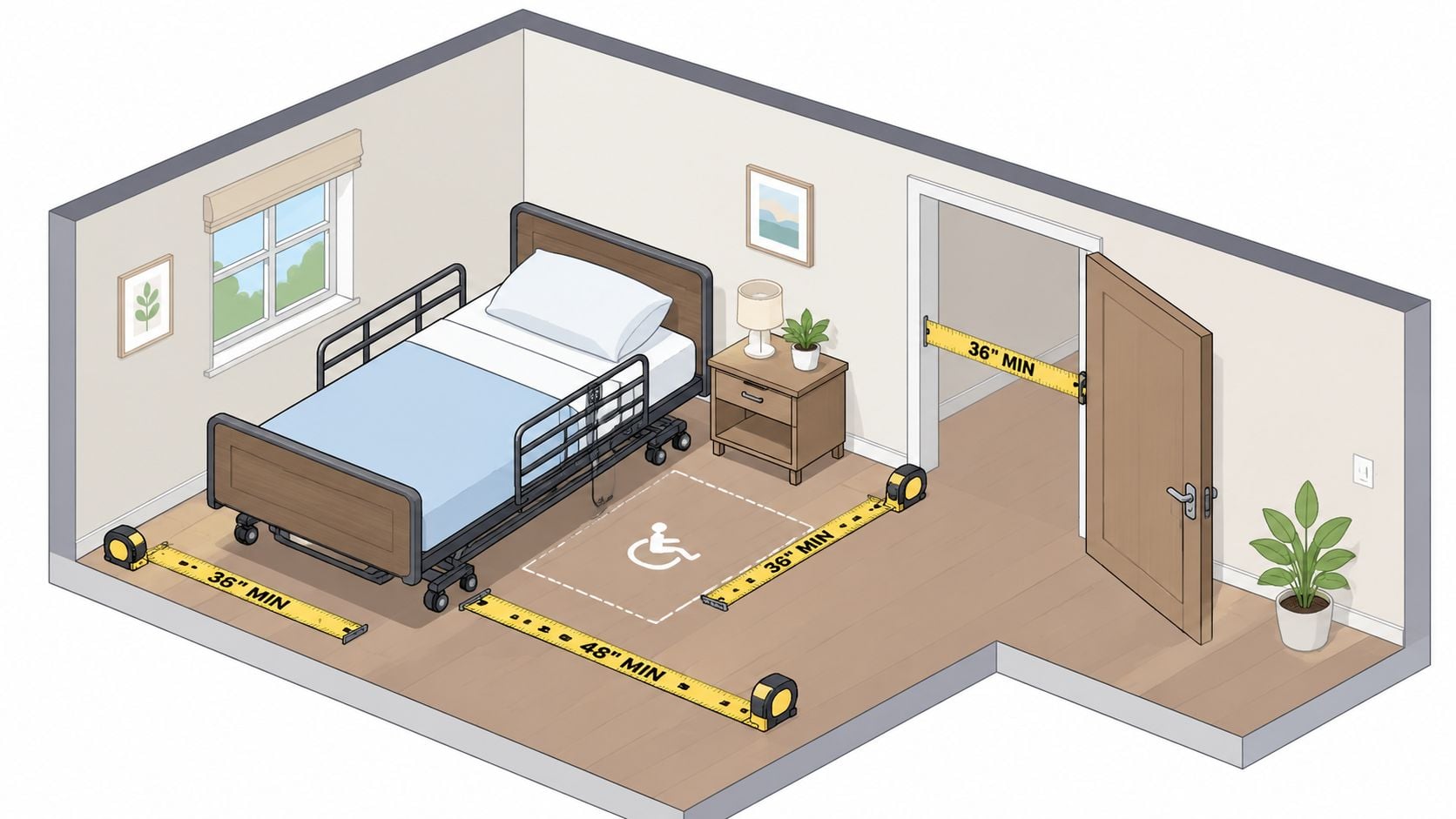
Start at the outside door and follow the path all the way to the bedroom. Measure doorway widths, hallway turns, stair landings, and any low overhead spots. Older Milwaukee homes often have one tricky corner that causes the main problem.
A short checklist keeps this manageable:
- Measure the bedroom door opening
- Measure the narrowest hallway point
- Check stair turns if the room is upstairs
- Measure wall-to-wall space in the bedroom
- Note windows, radiators, dressers, and closet doors
This is the same kind of practical thinking people use when buying furniture for tight homes. Delivery isn't just about the item itself. It's about the item plus the path.
Set up the room for real-life use
Once the bed is in the room, transfer space matters just as much as fit. The Florida accessibility guidance on transfer height and under-bed clearance recommends a mattress top height of 17 to 23 inches for safer wheelchair transfers. The same guidance also calls for at least 7 inches of clear space under the bed so a personal lift device can slide underneath.
Those details have a direct effect on safety. If the sleep surface sits too high, the person may have to climb or drop into bed. If there isn't enough space underneath, a lift may not fit, and the household may end up relying on risky manual transfers instead.
A room plan should leave usable space where it's needed most:
- Transfer side: The side used for wheelchair or walker access should stay open.
- Caregiver side: If someone helps with dressing or repositioning, they need standing room.
- Foot of bed: This area often gets crowded fast, especially in smaller rooms.
- Nightstand reach: Essentials should stay close without creating a tripping hazard.
For shoppers comparing frame heights, adjustable bed height is worth understanding before making a final choice.
In a small bedroom, a bed can technically fit and still function poorly. The real question is whether the person, helper, and equipment can move safely around it.
Sometimes the smartest decision isn't the biggest bed or the fanciest frame. It's the one that leaves enough clear space for life to happen around it.
Your Next Steps with BILTRITE in Milwaukee
Families usually feel more confident once they stop asking, “What's the best bed?” and start asking, “What bed will work best in this room, for this person, with this kind of help?” That shift changes the whole search.
The most useful next step is to test options in person. Sit on the edge. Try the controls. See how high and low the frame goes. Think through the route into the home and the amount of open space needed around the bed. Those practical checks tell more than a product photo ever will.
It also helps to bring a short list to the showroom:
- The user's main challenge such as standing, transferring, or repositioning
- Basic room measurements including doorways and tight corners
- Whether a caregiver assists regularly
- Whether the bed should feel residential or more care-focused
- Any paperwork needs if the family is exploring Medicare, VA, or private insurance support
While claims and coverage rules vary, families often need clear product information for their records. Having exact model details and specifications can make those conversations easier.
For Milwaukee-area households, local service matters here. Delivery, setup, and removing old bedding can be just as important as the bed itself. So can having real people nearby who understand how furniture has to function in older homes, smaller bedrooms, condos, and multi-level houses.
BILTRITE Furniture-Leather-Mattresses has served Metro Milwaukee since 1928 as a fourth-generation family business. The showroom in Greenfield gives families a chance to try supportive sleep solutions in person, talk with an experienced team, and get help thinking through fit, comfort, durability, and delivery logistics. With a large mattress selection, better-quality options, and a local approach that values service over pressure, it's a strong place to start when a bedroom needs to become safer and more comfortable.
For families searching for a safer, more comfortable bed setup at home, BILTRITE Furniture-Leather-Mattresses offers in-person guidance, experienced help, and a showroom where Milwaukee-area shoppers can try options for themselves. Visit the Greenfield store, talk with the team, and find a solution that fits the person, the room, and the way the home really works.