How to replace box spring Easily (2026 Guide)


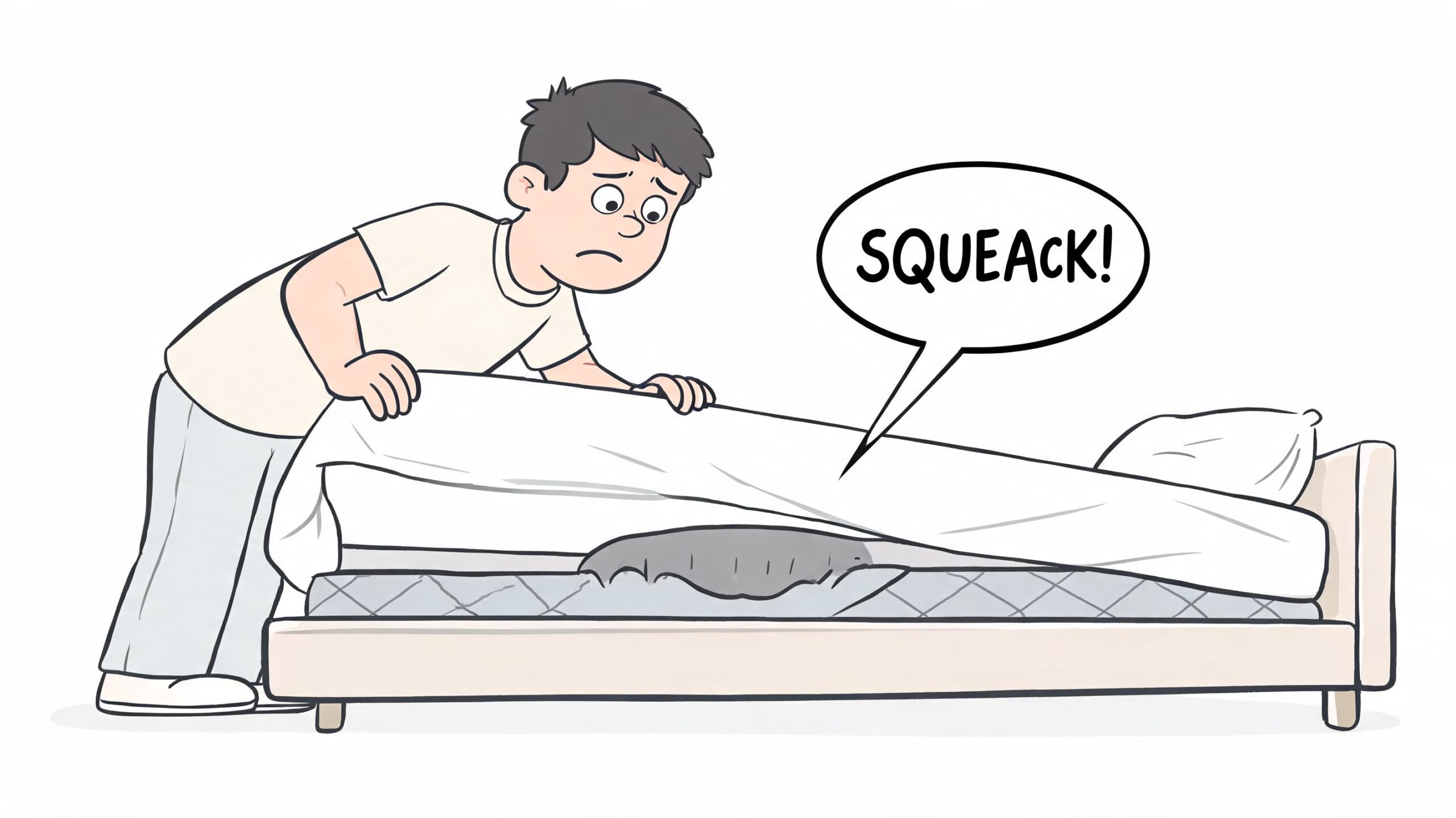
You roll over at 2 a.m., the bed answers with a creak, and suddenly you’re wide awake trying to decide whether it’s the house, the frame, the mattress, or that old box spring hanging on by a thread.
This is often put off too long. I get it. A box spring sits under the mattress, out of sight, and it rarely gets any attention until the bed starts talking back. But if your foundation is worn out, your mattress can’t do its job. Good sleep starts underneath the mattress, not just on top of it.
We’ve been helping Milwaukee families sort out bed problems like this since 1928, and the pattern is always the same. People blame the mattress first. Then they lift it up and find the true culprit.
That Squeak Isn’t Your Floorboards Is It
A couple walks into the store. They swear their mattress has gone bad. They’re waking up sore, one side of the bed dips, and every time one person gets up, the whole setup groans.
We ask a few questions. How old is the mattress? How old is the support underneath it? Did they keep the old box spring when they bought the newer mattress? Almost every time, the foundation is part of the problem.
That’s the sneaky thing about a worn box spring. It doesn’t always fail all at once. It gets noisy first. Then it loses support. Then the mattress starts wearing unevenly because it’s sitting on a tired base.
A bed can feel “old” even when the mattress isn’t the main issue. The support underneath often gives it away first.
In Milwaukee, we see this a lot in older homes, upstairs bedrooms, and tight spaces where people don’t want to wrestle with replacing anything bulky until they absolutely have to. But waiting usually costs more in the long run. If a worn foundation starts stressing a decent mattress, you’re no longer protecting the bigger investment.
If your bed frame is also suspect, take a look at what a strong bed frame should handle. A shaky frame and a worn box spring together are a recipe for lousy sleep.
The real issue under the noise
A squeak by itself doesn’t always mean disaster. But repeated creaking when you sit, roll over, or get out of bed usually means something underneath is moving that shouldn’t be moving.
That movement can come from:
- Loose joints: Wood connections start shifting after years of use.
- Tired coils: Traditional box springs lose their spring and stability over time.
- Warped support surfaces: Uneven support puts extra pressure on the mattress.
- Frame trouble: Sometimes the frame and box spring are both contributing.
The fix starts with a simple rule. Stop guessing. Lift the mattress and inspect what’s underneath.
Telltale Signs Your Box Spring Is Finished
Some box springs are old but still usable. Others are done, even if they look decent from across the room. You need to check the thing like a grown-up, not like somebody peeking under the bed for three seconds and hoping for good news.
Box springs typically last 8-10 years. Better ones with steel coils and hardwood frames can last a decade or more, while lower-quality versions made with plywood may fail in as little as 2-5 years. Persistent sagging, creaking, or bent steel grids are strong signs it’s time to replace box spring support before it damages your mattress, according to City Mattress on when to replace a box spring.
What to check first
Pull off the bedding, remove the mattress, and take a real look.
- Visible sagging: If the center bows or one side dips, the support is no longer even.
- Creaking with pressure: Push down on different spots. Noise means movement inside the foundation.
- Bent metal or broken wood: A steel grid that’s warped or wood that’s cracked won’t hold a mattress evenly.
- Fabric tearing or corners collapsing: Exterior damage often points to internal breakdown.
- Uneven mattress wear: If the mattress looks lumpy but isn’t that old, the base may be causing it.
Age matters, but condition matters more
I’m opinionated on this one. Don’t use age alone as your decision-maker, and don’t ignore age either.
If your box spring is already in that 8-10 year range, inspect it carefully. If it’s younger but you hear noise, feel dips, or see damage, don’t talk yourself into another year just because the calendar says it should still be fine.
Practical rule: If the foundation is noisy, sagging, or visibly bent, stop trying to “get by” with it.
A box spring should support securely and evenly. That’s its whole job.
When your mattress isn’t really the villain
A lot of people replace the mattress and keep the old foundation because it seems cheaper. That move backfires all the time. A new mattress placed on worn support can start breaking down faster than it should.
If you’re trying to sort out whether your current bed even needs one, this guide on whether your mattress needs a box spring is worth a look.
Here’s the short version. If the old box spring is compromised, it’s not “still helping a little.” It’s actively working against your mattress.
Your Guide to Modern Bed Support Systems
You’ve got more choices than “replace the box spring with another box spring.” That old advice leads people into bad support, wasted money, and beds that are harder to live with every year.
A lot of modern mattresses do better on a firmer, flatter base. The Sleep Foundation notes that many memory foam and hybrid models need consistent support from closely spaced slats, a solid foundation, or a platform bed to prevent sagging and help the mattress perform as intended, especially if you want to stay inside warranty guidelines.
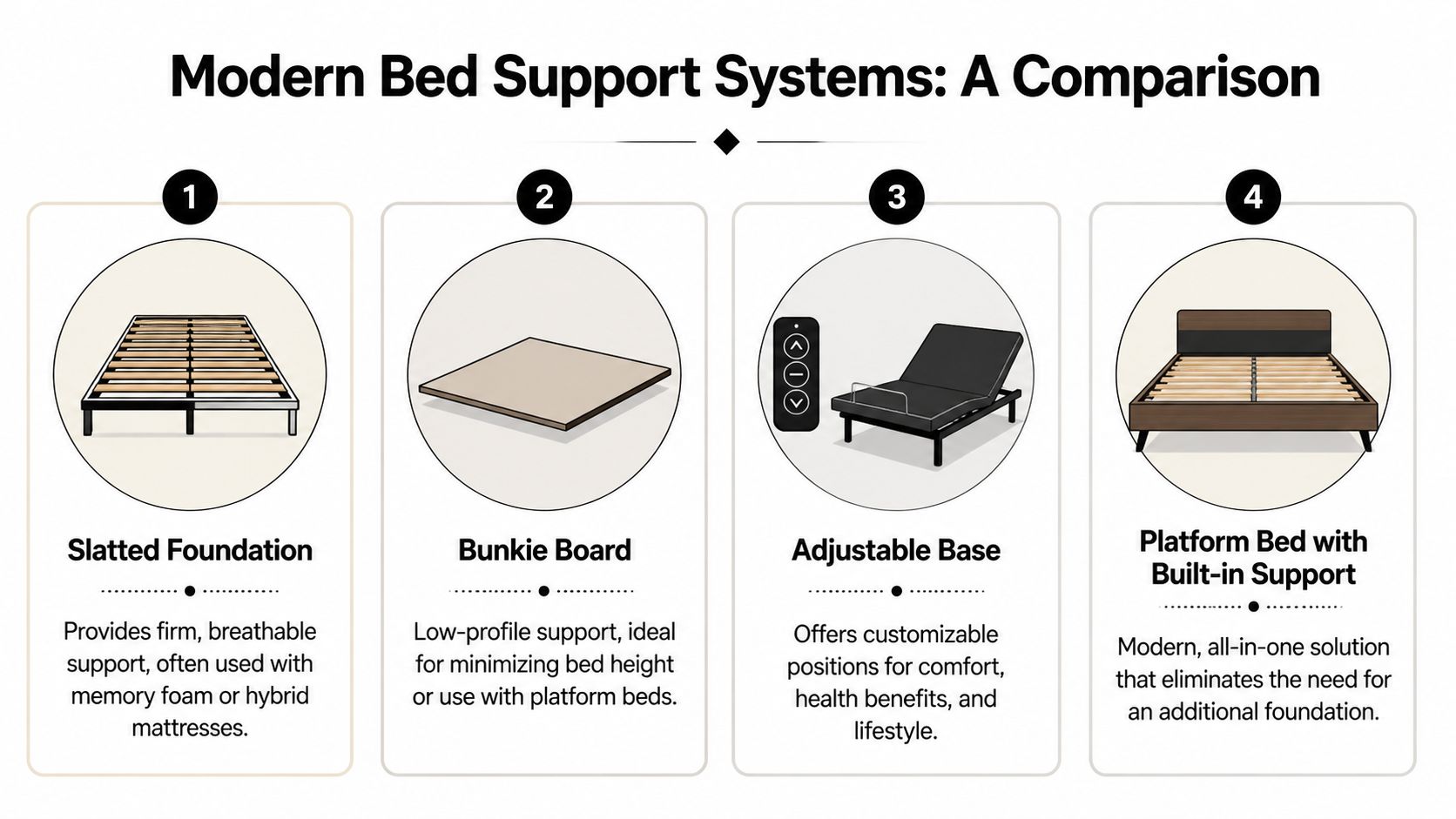
Traditional box spring
A true box spring has actual flex. That still fits some older innerspring mattresses built for that kind of support.
If you’re replacing support under a classic innerspring and the mattress maker says a box spring is fine, go ahead. If you’re buying for foam, latex, or a hybrid, skip the springy base and choose something firmer. You’ll get better support and better long-term value.
Solid foundation
This is the choice I recommend most often for people who like the look of a traditional bed but want modern support.
A solid foundation gives you the height of a box spring without the bounce. It holds the mattress more evenly, keeps the feel more consistent, and cuts down on the little shifts and squeaks that drive people crazy over time.
Bunkie board and low-profile support
Low-profile support earns its keep in Milwaukee bungalows, condos, upstairs bedrooms, and any home where a tall bed becomes a daily annoyance.
A bunkie board or low foundation helps lower the finished bed height without rebuilding the whole setup. That matters for shorter sleepers, guest rooms, kids’ rooms, and anyone who is tired of climbing into bed. It also helps in small spaces where a bulky foundation is awkward to move through tight stair turns and narrow doorways.
Platform bed with built-in support
A platform bed gets rid of the separate box spring altogether. Fewer parts. Fewer opportunities for wobble. Less money spent replacing two pieces when one well-built frame can do the job.
I like platform beds for straightforward setups and for rooms where every inch matters. If you want to compare slat spacing, center support, and frame construction, this guide to slatted bed frame support will help you sort the good from the flimsy.
Adjustable base
Adjustable bases are practical, not flashy. Raise your head for reading. Lift your legs after a long day. Make getting in and out of bed easier.
For some seniors, caregivers, and sleepers with circulation or comfort issues, an adjustable base solves daily problems a regular foundation never will. Just make sure the mattress is designed to bend and recover properly. Compatibility comes first.
Heavy-duty and senior-friendly choices
This part deserves more attention than it usually gets.
If the sleeper is heavier, if the mattress is extra-thick or flippable, or if someone uses the bed edge every day to sit and stand, lightweight support is a mistake. Thin slats can bow. Weak center rails can fail. Cheap metal can rack and loosen. Once that starts, the mattress wears unevenly and the whole bed feels less steady.
For heavy-duty use, I strongly prefer a platform or foundation with real structure under it. Solid wood construction, reinforced center support, and closely spaced slats matter. At BILTRITE, Amish-made solid wood platforms particularly stand out. They aren’t just nice-looking bedroom furniture. They hold up under real weight, repeated edge sitting, and years of use in a way bargain frames often do not.
For senior living needs, bed height is just as important as strength. Too high, and getting in feels awkward. Too low, and standing up gets harder on the knees and hips. A lower-profile foundation or platform can make the bed easier to use every single day without giving up support. If a customer in Milwaukee is setting up a condo, downsizing to a senior apartment, or replacing a guest bed for an aging parent, that height-and-stability combination is usually the smartest move.
Buy for the person using the bed, not for the stock photo in an online listing.
Box Spring vs. Foundation vs. Alternatives
| Support Type | Best For | Average Height | BILTRITE Pro Tip |
|---|---|---|---|
| Traditional box spring | Older innerspring mattresses that were designed for flex | Standard profile or low-profile versions | Good only if your mattress is actually compatible with spring support |
| Solid foundation | Many modern mattresses that need a firm, even base | Standard profile or low-profile versions | Best choice when you want classic bed height without coil movement |
| Bunkie board | Platform beds, lower bed height, tight rooms | Very low profile | Handy when the bed already sits high or needs a flatter surface |
| Platform bed with built-in support | Modern bedrooms, simple setups, no separate foundation | Varies by frame | Great for reducing parts and avoiding an extra box spring entirely |
| Adjustable base | Comfort-focused sleepers, seniors, lifestyle use | Varies by design | Check mattress compatibility first, not after delivery |
The Hands-On Guide to Making the Swap
A box spring swap goes wrong in the same predictable ways every week. The new piece fits the label on paper, then gets stuck in a stairwell, leaves the bed too high, or sits under a mattress it was never meant to support.
That’s how you turn a simple replacement into an expensive do-over.
Start with the room, then the bed
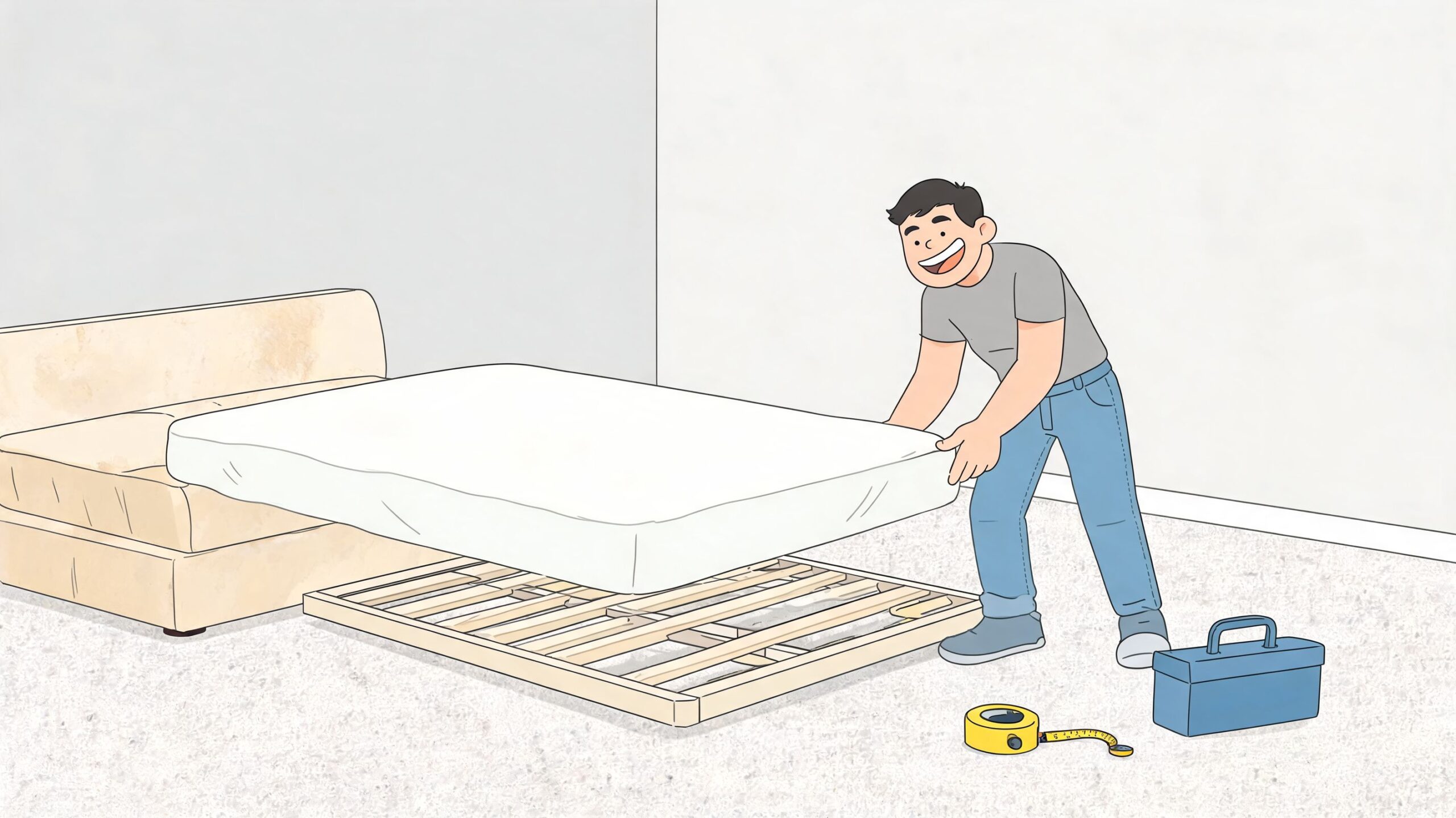
Don’t shop first. Measure first.
Get the mattress size, the inside dimensions of the frame, and the finished bed height you want. Then measure the route into the room. In Milwaukee bungalows, older duplexes, condos, and senior apartments, the path to the bedroom is often the main problem.
Check these before you buy:
- Frame dimensions: Match the support to the bed size exactly.
- Finished height: Add the frame, support, and mattress together so the bed is easy to get into and out of.
- Access points: Measure stair turns, hallway width, elevator depth, and bedroom doors.
- Mattress requirements: Foam and hybrid mattresses usually need flatter, more even support than an old-style spring unit provides.
If you’re carrying a bulky foundation upstairs, this guide on moving heavy furniture upstairs can save your walls and your back.
Check compatibility before you spend a dollar
This is the part that separates a smart replacement from a headache.
If your bed uses slats, keep the spacing tight enough for the mattress type. Foam and hybrid mattresses usually need slats no more than 3 inches apart. Wider gaps can let the mattress sag between supports, wear unevenly, and create warranty trouble. Woodstock Outlet’s guide on when to replace a box spring also points out a common mistake: pairing a modern mattress with an old, worn box spring that can’t give it the support it needs.
Here’s the plain-English version. A new mattress on bad support still feels bad.
Make the swap in the right order
Use two people. Box springs and foundations are awkward, and awkward is what scuffs trim, twists frames, and tweaks backs.
Follow this order:
- Strip the bed completely: Clear bedding, pillows, and anything on nearby furniture that could get bumped.
- Remove the mattress carefully: Set it on a clean, flat surface if you can.
- Take out the old box spring or foundation: Watch corners, railings, and door frames.
- Inspect the bed frame: Tighten bolts, check slats, and make sure center support legs are solid and touching the floor.
- Set the new support in place: It should sit flat, square, and quiet.
- Put the mattress back on: Then sit, lie down, and check for rocking, noise, or edge dip.
One small tip from years on the showroom floor. Test the bed before you remake it. It’s a lot easier to fix a wobble before the sheets go back on.
Problems that make a new setup feel wrong
If the bed feels off after the swap, the support is only one suspect.
These are the usual trouble spots:
- The bed is too tall: Common with thick mattresses and full-height foundations. Seniors and anyone with knee or hip trouble feel this right away.
- The support type is wrong: An older spring box under a foam mattress is one of the most common bad pairings we see.
- The frame is worn out: A loose frame can squeak and shift even with a brand-new foundation.
- Center support is missing or weak: Queen and king beds need solid middle support, not wishful thinking.
- The base doesn’t sit flat: If one corner rocks now, it won’t improve later.
For small-space homes, heavy-duty setups, or senior living, the best replacement is usually the one that fits the room, supports the mattress properly, and makes daily use easier. That’s long-term value. Not just getting the old box spring out and the new one in.
A good setup should feel quiet, level, and steady from the first night. If it doesn’t, stop and fix the support before it starts wearing on the mattress.
Handling Your Old Box Spring in Milwaukee
This part gets ignored until the new support arrives and the old one is still sitting in the hallway blocking everything.
Getting rid of an old box spring sounds simple until you’re standing in a second-floor condo stairwell trying not to destroy the wall paint. In Milwaukee apartments, smaller homes, duplexes, and senior living spaces, removal is often harder than the shopping.
Your disposal options
You’ve got a few paths, and the right one depends on condition and access.
- Donation: If the box spring is clean and still in donatable condition, some organizations may take it.
- Municipal or private bulk disposal: Useful, but you’ll need to follow local rules and hauling schedules.
- Recycling options: Worth checking if the unit is too worn for donation.
- Professional removal: Usually the least stressful route when access is tight.
The local headache is real. The logistics of replacing bulky items in apartments and condos are often overlooked, especially with narrow doors and stairs. Professional white-glove delivery and removal can prevent damage and save customers over $100 in separate disposal fees, according to DreamCloud’s look at box spring alternatives and removal logistics.
Why small-space removal changes the whole decision
If you live in Bay View, a condo near downtown, an older Milwaukee bungalow, or a senior living setup with tight turns, the removal plan matters almost as much as the replacement itself.
Dragging a worn box spring down stairs can scuff walls, strain your back, and turn a simple bedroom update into an all-day project. That’s why a lot of people are better off planning the swap and the haul-away together instead of treating disposal like an afterthought.
Old foundations don’t get easier to move once they’re already in the way.
If you want a local starting point, this guide on how to dispose of a mattress can help you think through the practical side before delivery day.
My advice for Milwaukee homeowners and renters
Don’t buy a replacement without knowing how the old one is leaving. That’s my straight answer.
If your building has a narrow entry, shared stairwell, or strict move-out rules, line up help ahead of time. The smoothest replace box spring job is the one where the old piece exits cleanly and the new one goes in without anyone denting drywall or giving up halfway down the stairs.
Come Say Hi and Feel the Difference Yourself
A bed support system isn’t glamorous, but it changes everything. If the base is wrong, the mattress never gets a fair chance. If the base is right, the whole bed feels steadier, quieter, and more comfortable from day one.
That matters even more for heavier sleepers, seniors, and anyone using a flippable mattress. Standard slats or box springs can fail prematurely in those situations, while sturdy USA-made and Amish-made solid wood platforms and heavy-duty frames offer better durability and help prevent the sagging that shortens mattress life, as discussed in Twilight Bedding’s article on replacing your box spring.

Why seeing it in person still matters
Photos don’t tell you how sturdy a frame feels. They don’t tell you whether a foundation sits too high, whether a slatted setup feels solid, or whether an adjustable base is worth it for your needs.
That’s why the showroom experience matters. You can lie down, sit on the edge, compare heights, and ask practical questions with someone standing right there.
Local guidance beats generic advice
Milwaukee homes aren’t all built the same. Neither are Milwaukee shoppers.
Some people need low-profile support for a smaller room. Some need heavy-duty strength. Some are helping a parent move into senior living and want a setup that’s easier to use every day. Some just want a quiet bed again.
The nice thing about working with a fourth-generation local business is that you can talk to actual people who’ve solved these exact problems for your neighbors. If you want to learn more about that kind of experience, take a look at why families look for family-owned furniture stores nearby.
If your bed squeaks, sags, or feels off, don’t keep blaming the mattress. Lift it up. Check the support. Replace what’s worn out. Your back will notice.
If you’re ready to replace your box spring and want real help sorting out foundations, heavy-duty frames, flippable mattress support, or small-space delivery challenges, visit BILTRITE Furniture-Leather-Mattresses. We’ve served Metro Milwaukee since 1928, we’re proud to be family-owned, and we’d love to help you find a better-supported bed in our Greenfield showroom. Come say hi and try the options for yourself.