Living Room Design with Leather Sofa: A BILTRITE Guide

A lot of living rooms start the same way. You’ve got the sofa picked out, or maybe you’re close, and then key questions emerge. Will leather make the room feel too dark? Too formal? Too cold? Will it fit in a smaller Milwaukee bungalow, condo, or apartment without taking over the whole space?
We’ve helped families work through those questions for generations. In our family business, we’ve been talking with Metro Milwaukee homeowners since 1928, and one thing hasn’t changed. A leather sofa can anchor a room in a way few other pieces can. It brings comfort, structure, and a settled feeling that makes the whole room feel more finished.
Good living room design with leather sofa pieces isn’t about following a rigid decorating formula. It’s about choosing the right scale, giving the room enough breathing room, and softening the look with color, wood, lighting, and texture. That’s where the room starts to feel warm and lived in, not stiff.
Welcome Home to Your Leather Sofa
A neighbor walks into our showroom all the time with the same look on their face. They know they like leather. They love the feel, the character, and the way it seems to get better as a home grows around it. But they’re nervous about making the room work.
That hesitation makes sense. A leather sofa has presence. It isn’t a background piece. But that’s also why it works so well. It gives your living room a strong starting point, whether your style leans classic, modern, rustic, or somewhere in between.
Leather is still a major choice for homeowners and designers. The global leather and faux leather sofas market reached about $15 billion in 2025 and is projected to grow to over $20 billion by 2032, according to Klaussner’s overview of leather sofa demand. That projection tells you something simple and useful. Leather hasn’t gone out of style. People still want it because it lasts, looks polished, and adapts to many kinds of rooms.
Why leather is easier to decorate with than people think
One of the biggest misconceptions we hear is that leather locks you into one look. It doesn’t.
A brown leather sofa can feel warm and relaxed with oak tables, woven baskets, and a soft rug. A black leather sofa can lean clean and modern with lighter walls and simple metal lamps. A gray leather sofa can settle right into a quieter, more layered room with wood tones and soft textiles.
Practical rule: Treat your leather sofa like an anchor, not the whole room. The personality comes from what you place around it.
That’s why so many homeowners start with leather and build outward. If you’re browsing living room essentials at BILTRITE, it helps to think of the sofa as the foundation. The rug, tables, lamps, and pillows are what make it feel like home.
A comfortable room beats a trendy one
The rooms people love most usually aren’t the flashiest. They’re the ones that feel easy to live in. The sofa is comfortable. The table is within reach. The lamp is in the right spot. Nothing feels crowded or awkward.
That’s the heart of living room design with leather sofa choices. You’re not trying to impress a magazine. You’re trying to create a room where your family wants to sit down, stretch out, visit, read, and stay awhile.
Choosing the Right Leather Sofa for Your Home
Before you pick paint colors or coffee tables, you need the right sofa. That sounds obvious, but many rooms go off track at this stage. People choose a leather sofa because they love the look in a large display setting, then bring it home and realize it’s too deep, too bulky, or too visually heavy for the room.
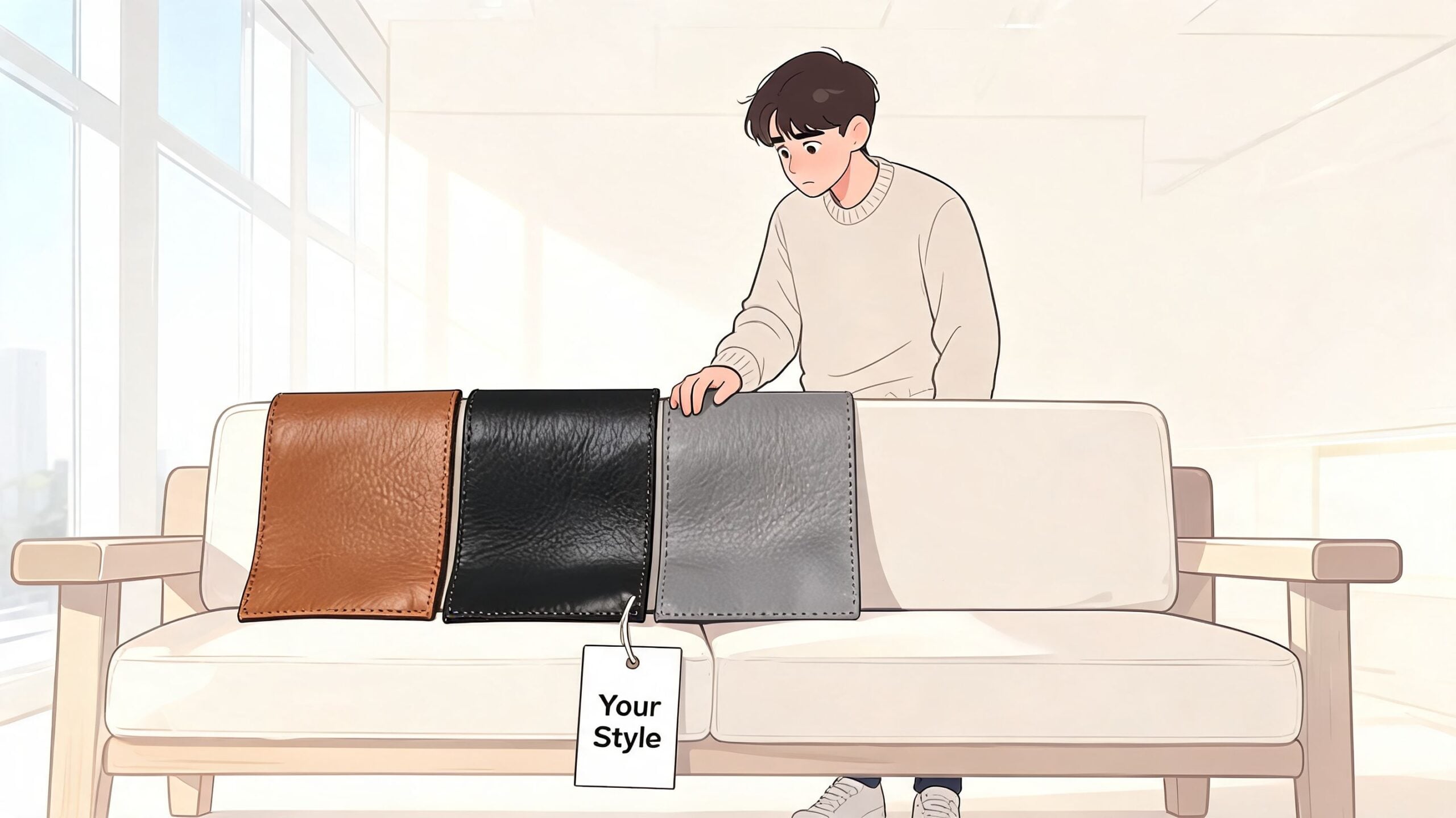
A common challenge in urban Milwaukee homes and apartments is limited space. BILTRITE addresses that with a specialized inventory of small-scale furniture and come-apart sectionals designed for compact living rooms and narrow doorways, as noted in this discussion of decorating around a leather sofa.
Start with scale, not color
Color gets the attention, but scale is the first decision.
If your room is modest in size, look at the sofa’s arm width, back height, and seat depth. A trim arm can save space. A lower back can keep sightlines open. A slightly smaller footprint often makes the whole room feel calmer.
A simple way to look at it is:
| Room concern | Better sofa direction |
|---|---|
| Narrow walkways | Slimmer arms and less depth |
| Tight doorway or stair access | Come-apart sofa or sectional |
| Small apartment or condo | Small-scale leather seating |
| Busy family room | Heavier-duty construction and easy-care surfaces |
That’s one reason local shoppers often appreciate guidance on what to look for when buying a leather couch. The shape and size matter just as much as the leather itself.
Match the sofa to your daily life
A leather sofa should fit your home, but it should also fit how you live.
If you host often, a sofa with a more upright sit can support conversation. If your living room is where everyone settles in for the evening, you may want deeper seating and a more relaxed profile. If kids, pets, or constant traffic are part of the picture, sturdier construction matters.
Consider these real-life filters:
- For compact homes: Smaller-scale sofas and sectionals help preserve open floor space.
- For tricky delivery paths: Come-apart designs can solve narrow doorway and stair problems.
- For active households: Heavy-duty seating can make more sense than delicate styling.
- For long-term value: USA-made and Amish-crafted pieces often appeal to homeowners who want solid construction and materials that feel substantial.
A sofa can look right in the store and still feel wrong at home if it doesn’t match your room size and routine.
Choose a leather color you can live with
This part should be fun.
Brown leather is forgiving, welcoming, and easy to pair with wood furniture. Black leather brings contrast and works well in cleaner, more modern spaces. Gray leather can bridge warm and cool tones nicely. If you love a richer or bolder leather tone, it can work beautifully, but it helps to keep the surrounding pieces quieter so the room doesn’t feel busy.
If you’re unsure, ask yourself one plain question. Do you want the sofa to blend in, or do you want it to stand out?
That answer usually points you in the right direction.
Arranging Your Room for Comfort and Flow
Once the sofa is home, placement matters as much as the piece itself. Some rooms feel cramped not because the furniture is too big, but because the layout interrupts movement. You shouldn’t have to sidestep a coffee table or squeeze past an armrest just to sit down.
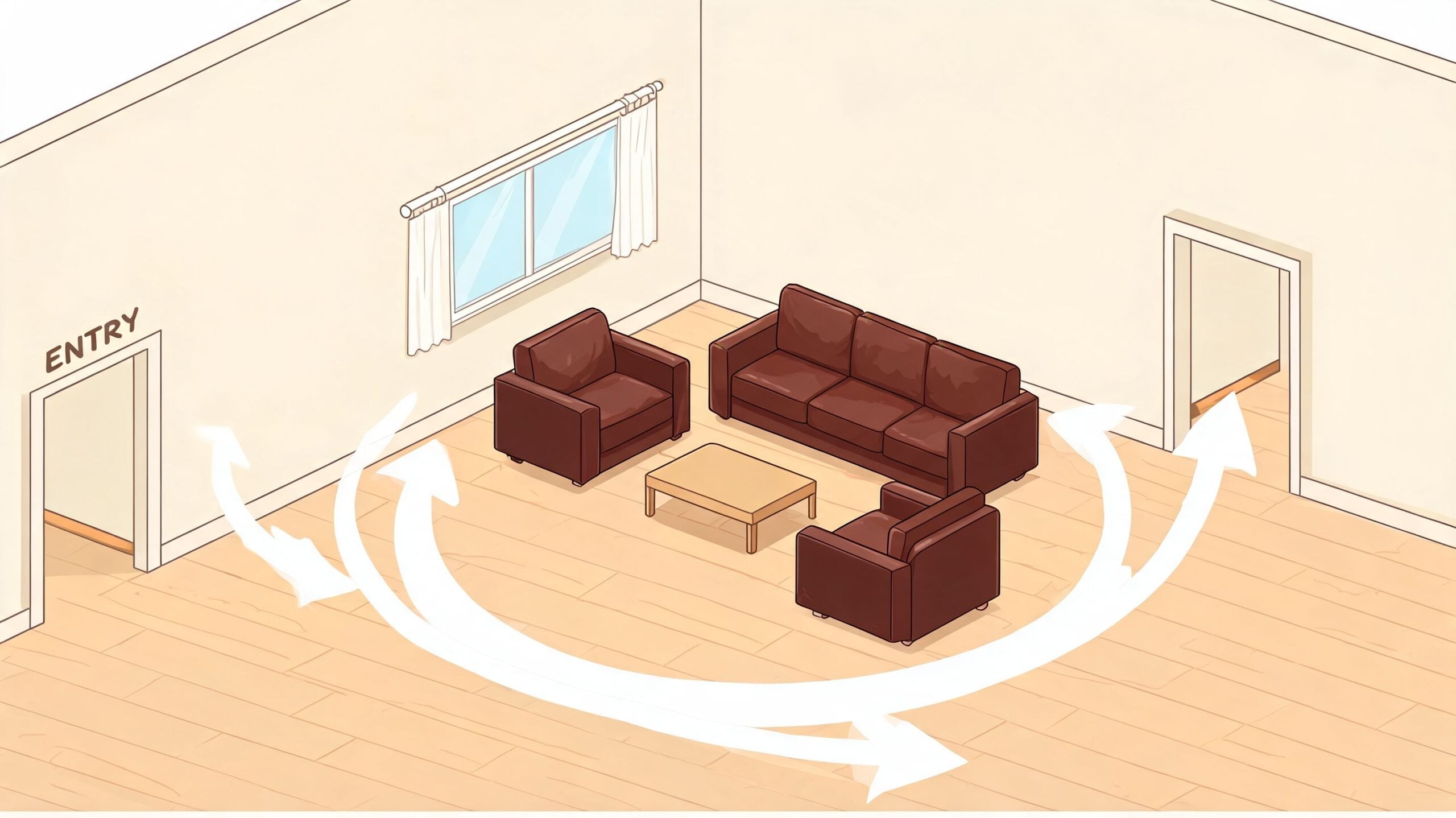
Evidence-based design calls for a minimum of 36 inches of circulation space around key seating areas and at least 18 inches between a sofa and coffee table, according to Homestyler’s article on living room layout with leather sofas. Those measurements support easier movement and visual accessibility.
The two measurements worth remembering
If you remember only two numbers for living room design with leather sofa layouts, make them these:
- 36 inches around key seating areas for circulation
- 18 inches between the sofa and coffee table for reach and movement
Those numbers help answer questions that usually feel subjective. Why does a room feel tight? Why does getting to the chair feel awkward? Why does the coffee table seem too close, even if it looked fine on paper? Often, the spacing is the issue.
Find the real focal point
A lot of people default to placing the sofa straight at the TV wall. Sometimes that’s right. Sometimes it isn’t.
Your focal point could be a fireplace, a picture window, a favorite built-in, or even the center of a conversation area. In many Milwaukee homes, especially older ones, the room may have more than one strong feature. In that case, the sofa should support the room, not fight it.
Try this order:
- Measure the room first.
- Mark door swings, vents, windows, and walkways.
- Identify the feature you want the seating to acknowledge.
- Place the sofa where it supports both conversation and movement.
If you’d like a planning head start, this sofa and television placement guide can help you think through proportions before moving heavy furniture around.
The best layouts feel natural to walk through. You notice comfort first, not the furniture arrangement.
Three room examples that usually work
Different rooms call for different instincts.
In a bungalow living room, a leather sofa often works best floating slightly off the wall if space allows, with a chair across from it to create a true seating zone.
In a condo, a compact sofa paired with one lighter accent chair can keep the room open without looking sparse.
In a long, narrow family room, placing the sofa along the longest wall may be the simplest move, but leave those walkways open so the room doesn’t become a hallway with cushions.
A good layout isn’t fancy. It just makes everyday life easier.
Matching Colors and Textures with Your Leather Sofa
This is where the room starts to feel personal. Leather already brings texture on its own, so the goal isn’t to pile on more heaviness. The goal is balance. You want materials and colors around the sofa that soften it, highlight it, or give it contrast.
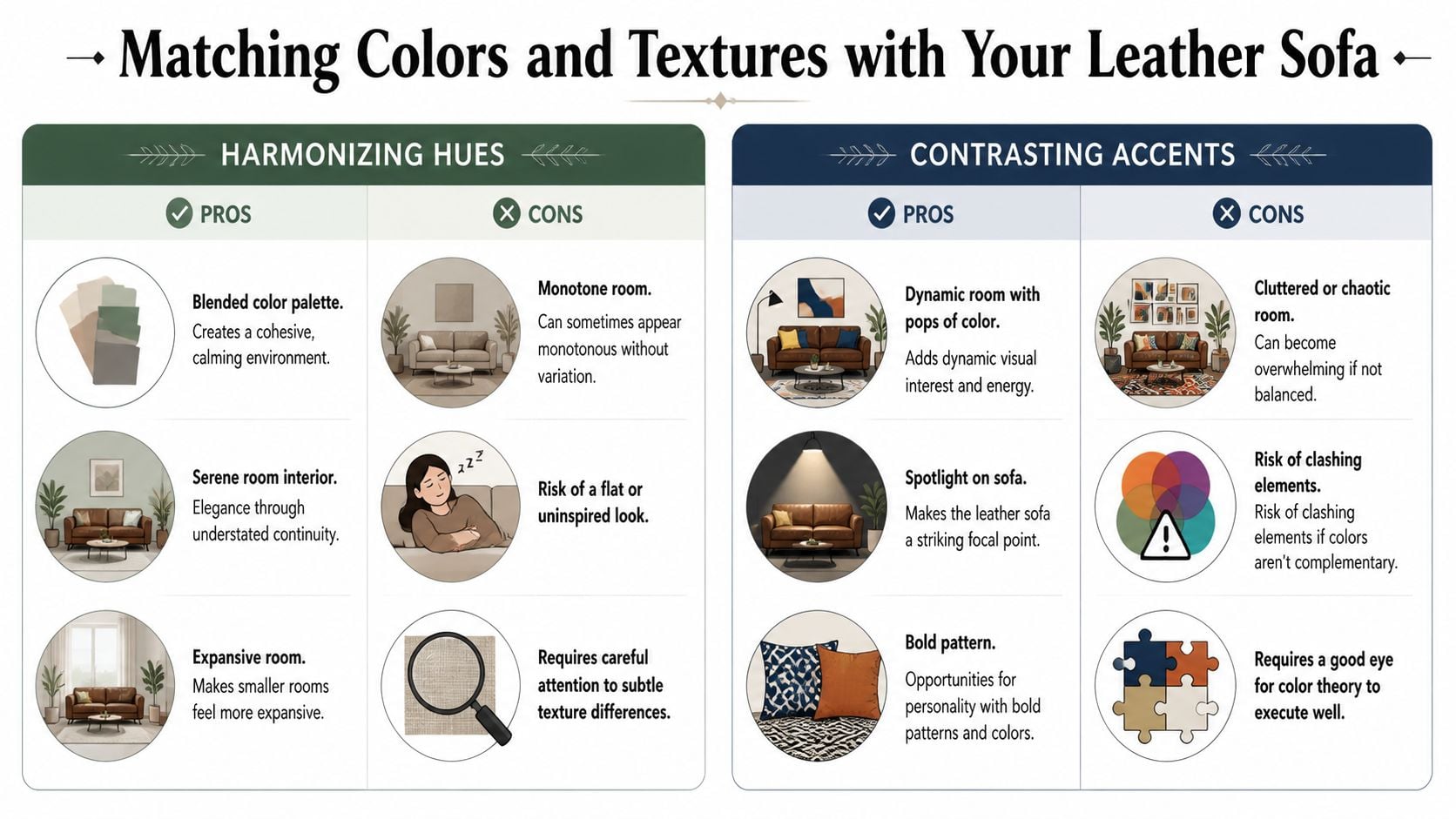
A leather sofa works so well in many styles because it can go in two directions. You can keep the room quiet and blended, or you can create more contrast and energy around it.
Harmonizing hues
If you want the room to feel calm and connected, stay close to the sofa’s tone.
A brown leather sofa can sit comfortably with warm whites, soft taupes, muted greens, clay tones, and natural wood. A gray leather sofa plays nicely with smoky blues, gentle creams, and weathered wood finishes. Black leather can feel less stark when it’s surrounded by warm neutrals instead of pure white.
This approach often works well in smaller rooms because the eye isn’t jumping from one high-contrast surface to another.
Why homeowners like it:
- It feels cohesive: The room has a steady, settled mood.
- It supports a quieter look: Great for homes that lean timeless rather than trendy.
- It helps tight spaces breathe: Similar tones can make a room feel less chopped up.
Where people get stuck:
- It can feel flat: If every surface is similar, the room may need stronger texture.
- It may lack contrast: The sofa can disappear too much into the background.
- It asks more from materials: Texture has to do the visual work that color contrast isn’t doing.
Contrasting accents
Contrast gives a leather sofa more punch. This is the route to take if you want the sofa to read as a clear focal point.
That could mean cream pillows on black leather, blue accents near cognac leather, or lighter walls behind a deeper brown sofa. The room wakes up a bit when you create light-against-dark or smooth-against-soft combinations.
Designer’s shortcut: If the sofa feels heavy, don’t replace it. Add softness around it with a lighter rug, textured pillows, and a throw with visible weave.
A contrast-based room often includes:
| Sofa tone | Contrasting accents that work well |
|---|---|
| Brown leather | Blue, soft ivory, muted charcoal |
| Black leather | Warm beige, olive, camel, light wood |
| Gray leather | Rust, cream, walnut, soft green |
For more ideas on pulling room colors together, this expert guide to the right color palette is a useful next step.
Texture is what makes leather feel inviting
This may be the biggest point in the whole article.
If a leather sofa ever feels too formal, the problem usually isn’t the leather. It’s the lack of contrast in texture. Leather is smooth, structured, and visually strong. It needs companions that feel soft, nubby, woven, plush, or matte.
Good pairings include:
- Chunky knit throws for softness and casual comfort
- Velvet or woven pillows to break up the smooth surface
- Plush or low-pile rugs to ground the seating area
- Wood furniture to add warmth and natural variation
- Linen or cotton curtains to keep the room from feeling rigid
A room with leather and no soft materials can feel unfinished. A room with leather plus texture feels balanced and welcoming.
Choosing Furniture and Lighting to Complete the Look
A leather sofa does a lot of visual heavy lifting. The supporting pieces should help, not compete. That means choosing tables, storage pieces, and lighting that echo the sofa’s quality and shape without crowding the room.
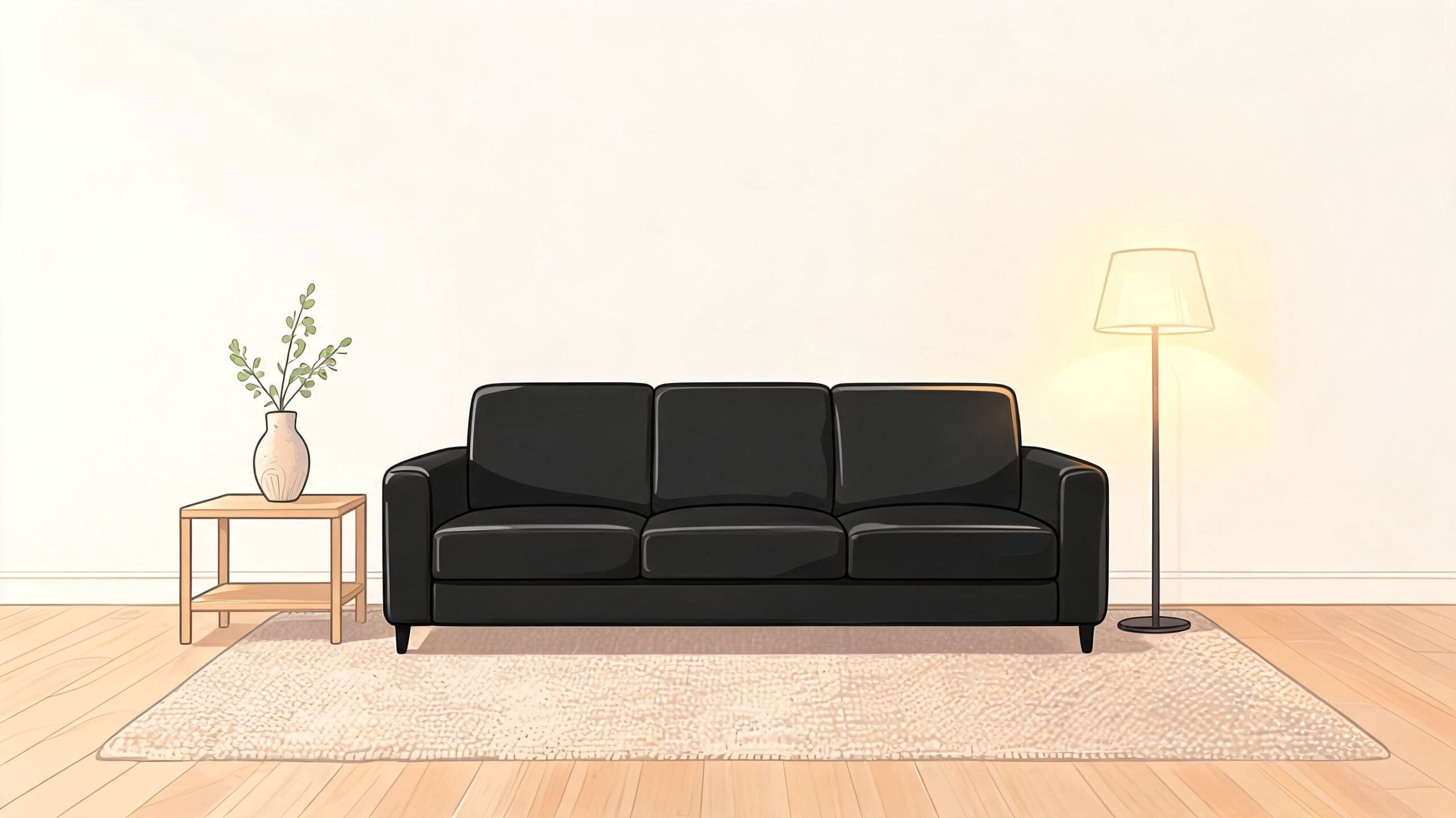
One combination we’ve always liked is leather plus real wood. They age well together. They also share something important. Neither one needs to be flashy to feel substantial.
Choose furniture with enough visual weight
A delicate side table next to a large leather sofa can feel out of scale. On the other hand, overly chunky tables can make a smaller room feel crowded.
The trick is matching visual weight.
If your sofa has broad arms and a strong profile, pair it with a coffee table that has some presence. Solid wood works especially well here. In many Milwaukee homes, Amish-made and USA-made wood pieces make natural partners for leather because both have a grounded, lasting look.
A few pairings that often work:
- Brown leather with oak or walnut
- Black leather with lighter wood for contrast
- Gray leather with medium wood tones for balance
If you’re considering showroom options, BILTRITE Furniture-Leather-Mattresses carries leather seating along with USA-made, Amish-made, and solid-wood case pieces, which makes it easier to compare how those materials work together in one room setting.
Don’t forget the side pieces
Living room design with leather sofa plans often focus only on the main seat, but the room gets easier to live in when the nearby pieces do their job.
Think about function first:
- Coffee table: Needs enough surface for daily use without blocking movement
- End table: Should land within comfortable reach of the sofa arm
- Media console or bookcase: Adds storage and helps the room feel finished
- Accent chair: Can soften the look if you choose a lighter fabric or wood frame
Your sofa may be the anchor, but the tables around it decide whether the room feels convenient or annoying.
Use layered lighting
Lighting changes leather more than many people expect. One overhead fixture can make the sofa look flat or overly shiny. Layered lighting gives the room depth.
Use at least a mix of these types:
| Lighting type | What it does in the room |
|---|---|
| Ambient light | General brightness from ceiling fixtures |
| Task light | Focused light for reading or hobbies |
| Accent light | Softer glow that adds warmth and mood |
A floor lamp near one end of the sofa can soften the seating area. A table lamp on an end table can make the room feel warmer at night. Even a small accent light near a bookcase or console adds a gentle layer that helps the leather feel richer instead of stark.
When the lighting is right, the whole room feels calmer.
Keeping Your Leather Sofa Looking Great and Our Promise
Leather is meant to be lived with. That’s part of its charm. It doesn’t need fussy treatment, but it does benefit from regular, simple care.
Dust it with a soft cloth now and then. Clean spills promptly. Keep it away from strong direct sunlight when possible. If the leather starts to feel dry, use a conditioner made for that type of leather. If you’re unsure how to handle that step, this guide on how to condition a leather sofa gives a helpful overview.
A few habits go a long way
You don’t need an elaborate maintenance routine. Small habits are enough.
- Wipe up spills quickly: The faster you act, the easier cleanup tends to be.
- Dust the arms and cushions: Everyday buildup can dull the surface over time.
- Rotate use when you can: It helps the sofa wear more evenly.
- Follow the care guidance for your leather type: Different finishes can need different handling.
That long-view mindset is a big part of how we think about furniture. We’ve been family-owned since 1928, and we’ve always believed that better-quality pieces are worth bringing home when they fit your life and budget.
What we mean by service
People in Metro Milwaukee often tell us they’re tired of feeling rushed when they shop for furniture. We get that. Buying a leather sofa is a real decision. You want time to sit, compare, ask questions, and think clearly.
Our sales associates bring over 400 years of combined experience, and that experience shows up in practical ways. We’ll talk through room size, entryways, wood tones, construction, and how a piece may live in your home. No pressure. Just help from people who’ve done this a long time.
We’re also proud to be closed on Sundays so our families can be with each other. That family-first approach has shaped our business for generations, and it’s one reason so many local shoppers still like working with a store where people remember their names.
If you’re trying to make sense of living room design with leather sofa options, come see the materials in person. Sit on the cushions. Touch the leather. Compare wood finishes. That’s still the best way to know what feels right for your home.
We’d love to see you in Greenfield. Visit BILTRITE Furniture-Leather-Mattresses to explore leather sofas, small-scale furniture, solid wood pieces, Amish-made options, and mattresses, then stop by our showroom and chat with our team about what will work well in your home.