FRIENDS & FAMILY SALE ENDS THURSDAY, APRIL 2ND AT 6PM!
3 DAY MATTRESS SALE! TUESDAY-WEDNESDAY & THURSDAY!
NO CREDIT CARD FEES!
EASTER BREAK - CLOSED FRI APRIL 3 THRU MON APRIL 6!
1000'S of items IN-STOCK + 500 Mattresses
Largest Selection of USA Made + Amish Made Furniture & Mattresses
SPECIAL HOURS - SHOP TUESDAY THRU THURSDAY!
36 FLIP-ABLE Mattress Models!
FRIENDS & FAMILY SALE ENDS THURSDAY, APRIL 2ND AT 6PM!
3 DAY MATTRESS SALE! TUESDAY-WEDNESDAY & THURSDAY!
NO CREDIT CARD FEES!
EASTER BREAK - CLOSED FRI APRIL 3 THRU MON APRIL 6!
1000'S of items IN-STOCK + 500 Mattresses
Largest Selection of USA Made + Amish Made Furniture & Mattresses
SPECIAL HOURS - SHOP TUESDAY THRU THURSDAY!
36 FLIP-ABLE Mattress Models!
Tuesday-Thursday 10am to 6pm | Friday 10am to 7pm | Saturday 10am to 5pm | Sunday Closed To Be With Family & Friends | Monday Showroom Closed
5430 West Layton Ave, Greenfield - Metro Milwaukee
When you condition your leather sofa, you're essentially applying a specialized product designed to put moisture back into the material and protect it. Think of it like a deep moisturizer that stops the leather from getting dry, cracking, or fading over time.
Honestly, this one simple step is the #1 thing you can do to keep your sofa soft, its color vibrant, and its overall health in check.
Why Your Leather Sofa Needs Some TLC
Hey neighbor! Let's talk about that beautiful leather sofa in your living room. Here at BILTRITE, we're a 4th generation family business, and since 1928, we've seen countless families make wonderful memories on their furniture. Just like anything you truly cherish, that sofa needs a bit of care to stay looking and feeling its best!
Leather is a natural material, which means it can lose its natural oils if left unattended. When that happens, it can become dry, stiff, and eventually, start to crack. You wouldn't skip moisturizer for your own skin, would you? A good conditioner works exactly the same way for your sofa.
Think of a quality leather conditioner as a spa day for your furniture. It replenishes essential moisture, keeping the leather soft, supple, and much more resistant to the spills and scuffs of daily family life.
It's about more than just appearances—it's about protecting your investment so it can serve your family for years, and maybe even generations, to come. Regular conditioning is a huge part of maintaining the high-quality, often USA-made, furniture we love and specialize in here at BILTRITE. To see what makes these pieces so special, feel free to explore our collection of USA-made leather furniture.
And the love for leather furniture isn't just a local thing; it's a staple in homes everywhere. The global leather furniture market was recently valued at USD 11,820 million and is only expected to grow, with homeowners like you making up over half of all purchases. This just goes to show how many families are choosing leather for its durability and style, making proper care more important than ever. You can read more about leather furniture trends on deepmarketinsights.com.
Choosing the Right Conditioner for Your Sofa
Walking into a store and seeing a wall of cleaning products can be overwhelming, right? Don't worry, we're here to help you pick the right stuff. As a 4th generation, family-owned business, we’ve spent decades helping our Metro Milwaukee neighbors find not just the right furniture, but also the best ways to care for it.
Choosing a conditioner isn’t a one-size-fits-all deal. Different types of leather respond better to certain formulas, and your choice really comes down to the kind of leather you have and the result you’re looking for.
Understanding Conditioner Types
Most of the options you’ll come across fall into three buckets: creams, oils, and waxes. Each has its place, and knowing the difference will save you a lot of guesswork.
Creamy Conditioners: These are your go-to for general maintenance. They absorb quickly and are great for most finished or pigmented leathers, helping to restore that soft, supple feel without leaving a heavy, greasy residue behind.
Conditioning Oils: Oils are fantastic for bringing older, drier, or even slightly cracked leather back to life. They penetrate deeper into the fibers, which is exactly what aniline or semi-aniline leathers need to replenish lost moisture.
Waxy Balms: Think of these as a protective topcoat for your sofa. Waxes create a robust barrier on the surface against water and stains—a huge plus for busy family homes with kids and pets!
It's amazing how much the focus on proper furniture care has grown. The global leather conditioner market was valued at USD 100 million not long ago and is expected to more than double by 2031. It just goes to show how many people are realizing this step is key to making their furniture last.
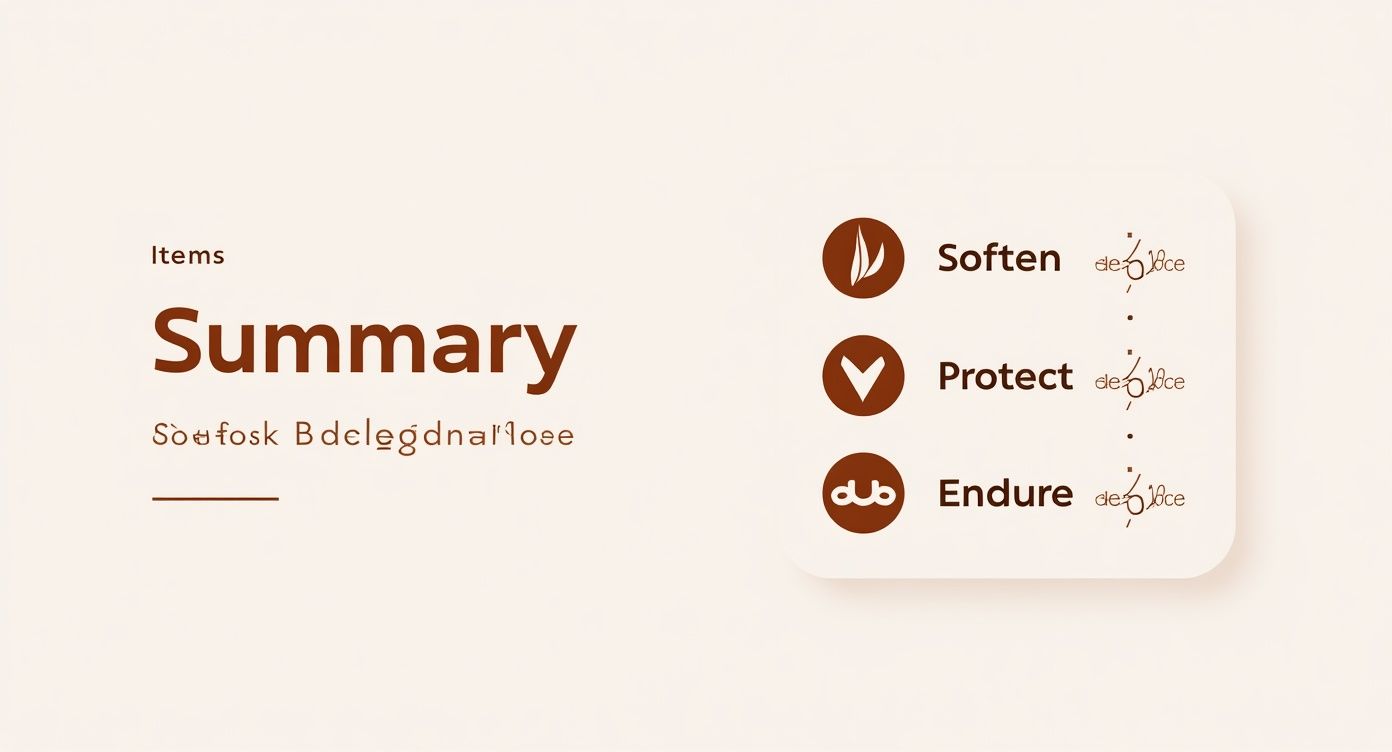
A good conditioner really does three things: it softens, protects, and helps your sofa endure the rigors of daily life.
This simple breakdown shows how conditioning is all about maintaining softness, adding a layer of protection, and ultimately helping your furniture last for years to come.
We always tell our customers to avoid products loaded with harsh chemicals, silicones, or petroleum distillates. These can actually damage the leather’s finish over time, especially on the high-quality, often USA-made, pieces we carry.
Before you buy anything, though, it helps to know what you're working with. Understanding your sofa's material is the most important first step. For a deeper dive into different options, you might be interested in our guide that covers everything you need to know about upholstery materials.
Leather Conditioner Types At-a-Glance
To make things even easier, here's a quick cheat sheet to help you narrow down your options based on what your sofa needs most.
Conditioner Type
Best For
Key Benefit
Creams
Regular maintenance and finished leathers.
Quick absorption, restores softness.
Oils
Reviving dry, old, or aniline leathers.
Deep penetration for intense moisturizing.
Waxes
High-traffic sofas in homes with kids/pets.
Creates a strong protective surface barrier.
Each type has a specific job, so matching the conditioner to your leather type and lifestyle is the secret to getting great results.
A Practical Guide to Conditioning Your Sofa
Ready to give your sofa some love? We get it. Conditioning your leather is one of the easiest and most satisfying ways to keep it looking fantastic for years. Here at BILTRITE, we're all about straightforward, practical advice—no complicated jargon, just simple steps that actually work.
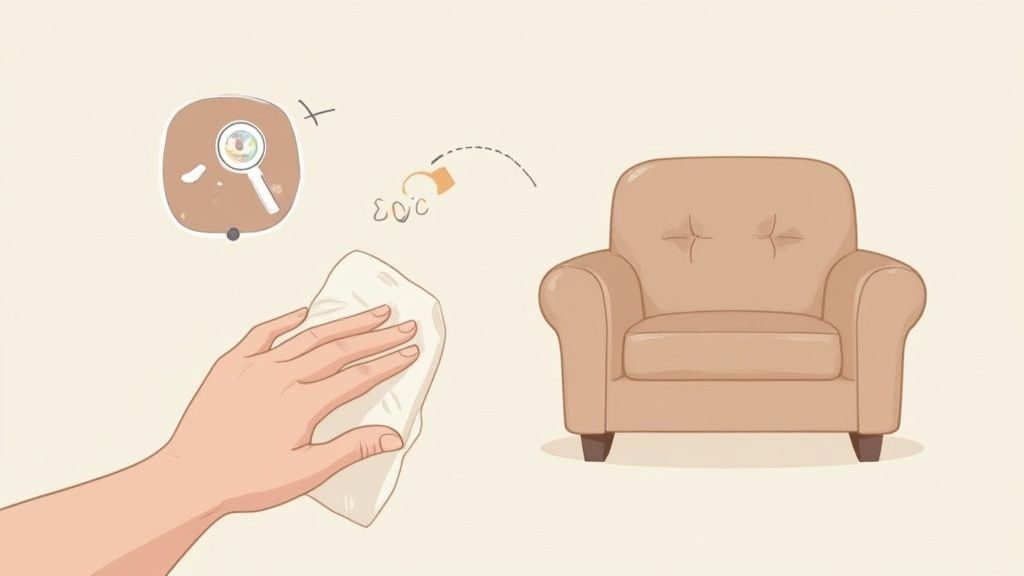
First things first, you need a clean canvas. Before you even think about opening that conditioner, grab a soft, dry microfiber cloth and give your sofa a quick wipe-down. This gets rid of any surface dust, crumbs, or pet hair that might be hanging around. For any stubborn spots, a slightly damp cloth will do the trick, but make sure the leather is 100% dry before you move on.
Testing Before You Treat
Now for a crucial step our team always recommends: the patch test. We can't stress this enough. No matter how great a conditioner is, every piece of leather has its own unique character.
Find an out-of-the-way spot on your sofa—like on the back near the bottom or under a cushion—and apply just a tiny bit of the conditioner. Let it dry completely, and then check it out. This simple test ensures the product won't discolor your sofa's beautiful finish. Better safe than sorry, right?
Applying the Conditioner
Once your patch test is a success, you're ready for the main event!
Squeeze a small amount of conditioner onto a clean, lint-free cloth—never directly onto the leather itself. Trust us, a little goes a very long way.
Work in small, manageable sections using gentle, circular motions. Think of it like applying lotion; you want to work it into the material without rubbing too harshly. We’ve found this technique gives that beautiful, consistent finish everyone loves and helps the leather absorb all that much-needed moisture.
After applying the conditioner, let it sit and soak in for at least 30 minutes. Don’t rush this part! This is where the magic happens, as the oils and moisturizers penetrate deep into the leather's pores for a deep, nourishing treatment.
Finally, take another clean, dry cloth and gently buff the entire surface. This removes any leftover product and brings out a wonderful, healthy sheen. It’s an easy process that truly makes a world of difference for the longevity and look of your furniture.
Taking care of your furniture shouldn't feel like a chore. For more tips from our family to yours, check out our general furniture maintenance guide for advice that helps protect your investment. We're all about helping you keep your home comfortable and beautiful for years to come.
Common Leather Care Mistakes to Avoid
Here at BILTRITE, we’ve been in the furniture business since 1928, so our family has seen it all when it comes to furniture care—the good, the bad, and the sticky! To help you get it right every time, we've put together a list of common slip-ups we see folks make.
These are simple tips from our family to yours to help keep your furniture looking its absolute best for years to come.
Using the Wrong Products
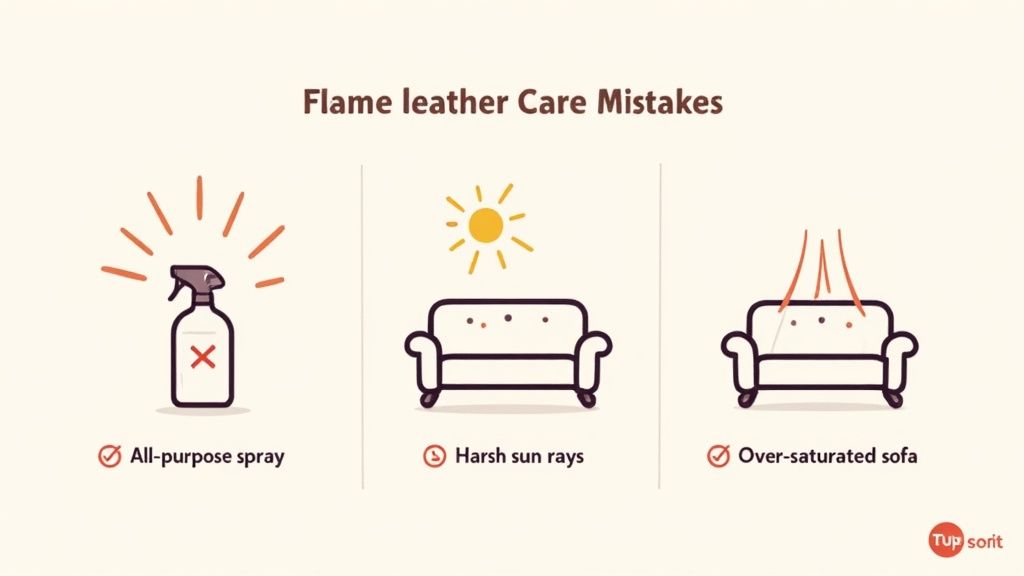
One of the biggest mistakes we see is someone grabbing any old all-purpose spray from under the sink. Please don't do it! These cleaners often contain harsh chemicals like ammonia or alcohol that strip the natural oils from your leather. Over time, this leads to dryness, discoloration, and even cracking.
Always stick to products specifically designed for leather. It's also critical to know what kind of material you’re working with in the first place. The care process is completely different when you're dealing with genuine leather versus figuring out if faux leather is durable.
Over-Saturating the Leather
When conditioning a leather sofa, it’s easy to think that more is better, but that's definitely not the case. Applying way too much conditioner can oversaturate the material, leaving behind a greasy, sticky residue that just attracts more dust and dirt.
A little truly goes a long way.
A good rule of thumb is to apply a thin, even layer that absorbs within about 30 minutes. If there’s still a lot of excess product sitting on the surface after that time, you’ve likely used too much.
Forgetting Key Steps
It's tempting to get excited and jump right to the conditioning, but skipping the prep work can do more harm than good. A couple of crucial steps get missed all the time:
Skipping the Cleaning: Always, always clean the surface first. Applying conditioner over dirt and grime just seals it all into the leather's pores, which is the last thing you want.
Ignoring the Patch Test: We mentioned this before, but it bears repeating! Testing the conditioner on a hidden spot first prevents any unwelcome surprises, like discoloration, on a visible part of your sofa.
Placing It in Direct Sunlight
We love a sunny room as much as anyone, but direct sunlight is leather's worst enemy. Those powerful UV rays can cause the color to fade unevenly and will dry out the material much faster, eventually leading to cracks.
If possible, try to position your beautiful leather sofa away from a window that gets intense, direct sun all day. A little bit of planning with your room layout can add years to its life.
Keeping That Beautiful Leather Glow for the Long Haul
Conditioning isn't a one-and-done chore; it's about getting into a simple, sustainable rhythm to keep that leather sofa you love looking incredible. Here at BILTRITE, our family has been helping folks in Metro Milwaukee care for their furniture since 1928, and if there's one thing we've learned, it's that a little consistency goes a very long way.
Think of it as a quick health check for your furniture. For most homes, a good, thorough conditioning every 6 to 12 months is a great sweet spot. If your sofa gets a lot of direct sunlight or your home tends to be on the dry side, you’ll want to lean closer to that six-month mark. Staying ahead of the game like this prevents much bigger headaches later on.
Simple Daily and Weekly Habits
Beyond the deep conditioning sessions, a few quick habits can make a massive difference in preventing premature wear and tear. You'd be surprised how much these little things add up.
Wipe Up Spills Immediately: Leather is tough, but it's not invincible. Blot spills right away with a clean, dry cloth before they have a chance to set.
Dust Regularly: A quick pass with a dry microfiber cloth once a week is all it takes. This keeps abrasive dust and grit from settling into the grain and acting like sandpaper over time.
This kind of routine maintenance is becoming more and more common. In fact, the global market for leather care products is expected to jump from USD 3.9 billion to USD 5.9 billion by 2034. It just goes to show how many families are choosing to invest in protecting their furniture for the long run. You can find more details about the leather care market on techsciresearch.com.
A consistent care schedule keeps your sofa a stunning centerpiece in your home. It’s not about being fussy; it’s about protecting a piece where your family makes memories.
For more seasonal ideas, you might find our guide on creating a fall furniture maintenance checklist helpful. We’d love to see you in our Greenfield showroom to chat more and show you our wide selection of quality, affordable leather furniture!
Your Leather Sofa Care Questions Answered
When families visit our showroom, we get a lot of fantastic questions about keeping furniture looking its best. Here at BILTRITE, we've been helping folks in Metro Milwaukee since 1928, so we've learned a thing or two and love sharing that knowledge. Our awesome team has over 400 years of combined experience, so we're always happy to help you feel confident caring for your leather pieces.
How Often Should I Condition My Sofa?
For most homes, we recommend conditioning your leather sofa every 6 to 12 months.
Think about where your sofa lives. If it gets a lot of direct sun from a window or your home gets particularly dry (especially during those long Wisconsin winters!), you’ll want to lean closer to that six-month mark.
Can I Use Household Oils?
We hear this one quite a bit! While it might seem like a clever, thrifty idea, we strongly advise against using products from your kitchen, like olive oil. Food-based oils can eventually go rancid, creating an unpleasant smell and actually attracting more dirt and grime to the surface.
It's always best to stick with a product specifically formulated for leather furniture. This is the surest way to protect your investment for years to come.
Think of it like this: cleaning your sofa is like washing your hands, and conditioning is like putting on lotion afterward. Cleaning gets rid of the surface-level dust, oils, and daily buildup. Conditioning is the crucial next step that moisturizes the leather, restoring its flexibility and protecting it from drying out.
What’s the Difference Between Cleaning and Conditioning?
That's a fantastic question, and it's important to know the distinction. Cleaning is all about removing the daily grime from the surface of the leather.
Conditioning, on the other hand, is about feeding and nourishing the material itself. This is what keeps it supple and prevents it from getting dry and brittle. Just remember to always clean before you condition to avoid sealing in any dirt.
Feeling more confident about leather care? We hope so! If you're on the hunt for a new piece to love, come on down to our showroom and see for yourself! We'd love to say hi and help you find something great for your home. See what makes our family-owned store special at https://www.biltritefurniture.com.